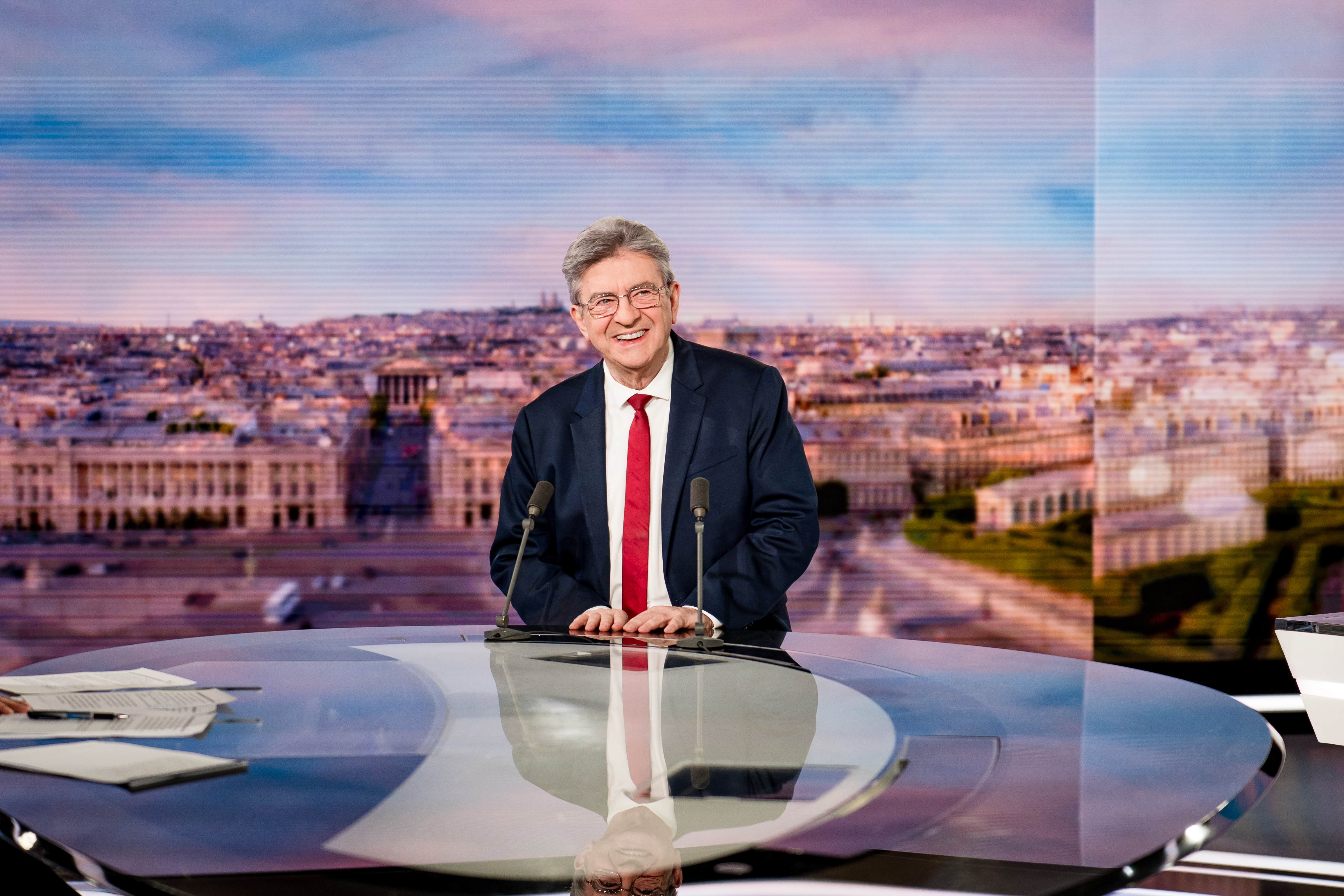
As France moves closer to the 2027 presidential election, political debate over potential candidates and their programmes is becoming increasingly intense. One of the most prominent figures preparing to challenge for the
presidency is Jean-Luc Mélenchon, leader of the left-wing France Unbowed (La France Insoumise, LFI) party. His latest political programme has once again brought France’s relationship with NATO into the spotlight, with Mélenchon pledging to gradually withdraw the country from the military alliance and pursue a more independent foreign policy.
Mélenchon presented his presidential programme, entitled L'Avenir en commun (A Shared Future), at a rally in Le Bourget, in the northern suburbs of Paris, on Saturday. The event attracted approximately 17,000 supporters, according to campaign director Manuel Bompard, demonstrating the mobilisation capacity of the left-wing movement ahead of the election.
At 75, Mélenchon is widely regarded as one of the strongest potential contenders on the French left. Recent opinion polls have suggested that he could reach the second round of the presidential election, potentially facing Marine Le Pen of the far-right National Rally. However, the same surveys indicate that he could struggle to defeat her in a head-to-head contest.
His programme represents the fifth edition of LFI's political manifesto and largely reinforces the positions that have defined his previous presidential campaigns. Nevertheless, its publication signals that the debate over France's political and strategic direction is already gaining momentum well ahead of the election.
NATO withdrawal at the centre of foreign policy ambitions
One of the most controversial elements of Mélenchon's programme concerns France's membership of NATO. The politician has reiterated his long-standing criticism of the alliance and called for a gradual withdrawal, beginning with France's departure from NATO's integrated military command.
"We have no business being in NATO, nor in American wars," Mélenchon declared during the rally.
He argued that France should pursue a more independent international position and establish closer relations with countries that do not wish to align themselves with either major geopolitical bloc. His programme therefore advocates the creation of a global coalition of non-aligned countries.
Such proposals could have significant implications for European security and transatlantic relations. France remains one of NATO's most important military powers and a central participant in European defence initiatives. Any attempt to distance the country from the alliance would inevitably raise questions about the future of European security cooperation, particularly amid continuing tensions with Russia and uncertainty surrounding the long-term commitment of the United States to European defence.
Mélenchon's position also contrasts with the approach traditionally pursued by France's mainstream political establishment, which has generally regarded NATO membership and cooperation with European allies as essential components of national security.
Economic stimulus and higher social spending
Alongside his foreign policy proposals, Mélenchon has presented an ambitious economic programme designed to reverse the policies implemented under President Emmanuel Macron.
The LFI leader promised to introduce an economic stimulus strategy based on strengthening consumer spending and redirecting existing financial resources towards social and environmental priorities.
"We are going to do exactly the opposite — that is to say, a policy of stimulus," he told supporters.
Among the programme's principal proposals is an increase in the monthly net minimum wage from approximately €1,480 to €1,700. Mélenchon also wants to freeze prices, link wages to inflation and introduce price controls on essential food products to address the cost-of-living crisis.
His party is additionally proposing higher taxation for the wealthiest households, the abolition of the flat tax on capital income and measures to redistribute wealth.
Another major commitment concerns the pension system. Mélenchon has pledged to reverse Macron's controversial pension reform, which gradually increased the minimum retirement age from 62 to 64. Under the LFI proposal, retirement at 60 would be restored for people who have contributed to the system for 40 years.
The economic programme also includes a fundamental change in energy policy. Mélenchon supports gradually phasing out nuclear power in favour of a fully renewable electricity system. This would involve abandoning the planned EPR2 programme for new-generation nuclear reactors and refusing to extend the operating lifespan of existing nuclear power plants beyond 60 years.
A challenge to Macron's European economic model
Mélenchon's manifesto also contains criticism of the economic direction of the European Union, particularly Germany's influence over EU fiscal and economic policy.
The document describes Berlin as Europe's principal defender of ordoliberalism, an economic philosophy emphasising strict budgetary discipline, price stability and independent monetary policy.
This criticism reflects Mélenchon's broader ambition to challenge what he considers an excessively restrictive European economic model and replace it with policies prioritising public investment, social protection and state intervention.
As the 2027 presidential election approaches, these proposals are likely to become an increasingly important part of the French political debate. The contest will not simply determine who succeeds Macron at the Élysée Palace. It will also offer voters a choice between fundamentally different visions of France's role in Europe, its economic priorities and its position within the international security architecture.
Mélenchon's renewed call for NATO withdrawal makes this divide particularly clear. His candidacy could turn the country's future relationship with the United States, NATO and the European Union into some of the most contentious issues of the presidential campaign. Photo by jlm2017.fr, Wikimedia commons.