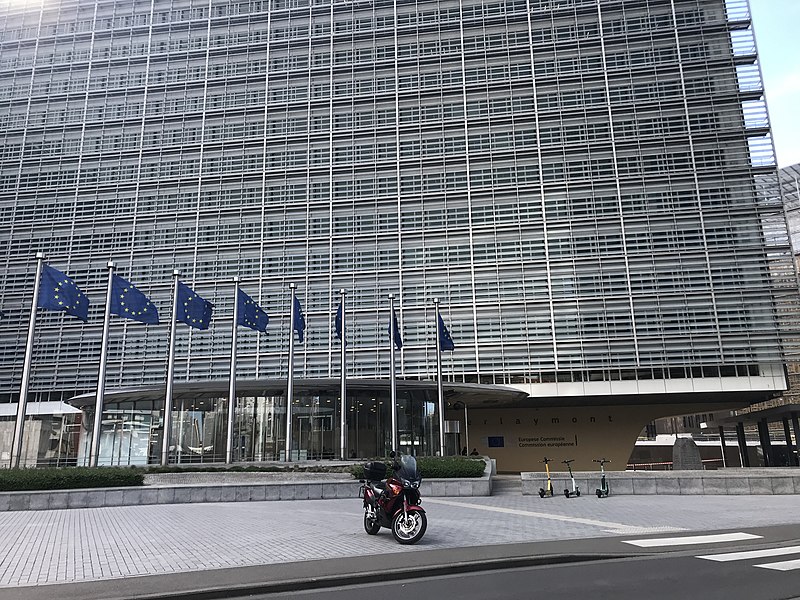
The European Commission has transferred almost €6.5 billion to France, Austria and Luxembourg under the EU’s post-pandemic recovery programme, recognising the three countries’ progress in implementing reforms
and completing investments designed to strengthen their economies.
The payments, made through the Recovery and Resilience Facility (RRF), form part of the €750 billion NextGenerationEU initiative, established to help European countries recover from the economic consequences of the COVID-19 pandemic while accelerating the transition towards greener, more digital and competitive economies.
France received the largest share, with €6.1 billion, followed by Austria, which was allocated €306 million, and Luxembourg, which received €92.2 million. The funding was released after the European Commission confirmed that the countries had met the required milestones and targets under their respective national recovery plans. The payments also followed favourable assessments by the Council’s Economic and Financial Committee and formal approval by the Commission.
France completes its recovery programme
France has received its fifth and final payment of €6.1 billion, bringing the total amount of funding delivered under its national recovery and resilience plan to €40.3 billion. The latest transfer means that the country has now received its entire allocation after successfully completing all 176 milestones and targets established under the programme.
The final payment recognises progress across several areas, including energy efficiency, cultural heritage preservation, scientific research and workplace protection.
A major component of the programme has been the modernisation of buildings. Through the MaPrimeRénov scheme, more than 1,000 public buildings and almost 400,000 private homes have benefited from energy renovation investments. The programme has also supported restoration work on more than 140 cathedrals and historic monuments, helping preserve France’s architectural and cultural heritage.
Additional measures have strengthened public research funding, encouraging closer cooperation between scientific institutions and businesses. France has also introduced reforms aimed at improving occupational health and safety, including the certification of the first inter-company occupational health and safety services.
Paris submitted its final payment application on 26 June 2026. It covered 10 milestones and 17 targets, representing the concluding stage of the country's recovery programme. The European Commission issued a positive preliminary assessment on 29 September 2026.
Austria receives its final EU recovery payment
Austria has also completed its participation in the Recovery and Resilience Facility, receiving a final instalment of €306 million. This brings the country's total funding under the programme to €3.96 billion, representing 100% of its allocated resources.
The latest payment reflects the completion of projects intended to modernise infrastructure, promote industrial decarbonisation and strengthen Austria's technological capabilities.
Among the most significant achievements are 19 large-scale projects supporting companies in reducing carbon emissions through renewable energy and improved energy efficiency. EU funding has also contributed to the development of sections of the new Koralm railway line, a major infrastructure project designed to improve rail connections.
Digital connectivity has been another priority, with more than 80,000 households gaining access to gigabit-capable broadband networks.
Austria's recovery programme has additionally supported research facilities specialising in precision medicine and quantum computing, as well as innovation initiatives in microelectronics and hydrogen technologies. Other measures include the introduction of an electronic parent-child health record system.
The country submitted its fifth and final payment request on 29 July 2026. The application covered eight milestones and 10 targets and received a favourable preliminary assessment from the Commission on 29 September.
Luxembourg advances green mobility and public administration reforms
Luxembourg received €92.2 million, marking its third payment under the Recovery and Resilience Facility. Following this transfer, the country has secured 76% of its total €241 million grant allocation.
The funding supports a range of initiatives focused on environmental sustainability, digital government services and improvements to the healthcare system.
One of the programme's most significant achievements has been the promotion of zero-emission transport. Financial incentives have helped support the purchase of more than 42,000 electric and other zero-emission vehicles, contributing to the country's efforts to reduce transport-related emissions.
Luxembourg has also made progress in modernising its public administration. Five government bodies have been connected to a central digital platform for managing official documents and administrative cases, helping streamline public services and reduce reliance on paper-based procedures.
Further reforms have targeted the healthcare sector, including modernisation of the legal framework governing medical professions and hospital organisation.
Environmental protection has also featured prominently in the programme. Through the Naturpakt initiative, municipalities have been encouraged to strengthen biodiversity conservation and improve local environmental management, with participating authorities receiving environmental certification.
Luxembourg submitted its third payment request on 24 July 2026. The application covered five milestones and four targets, with the Commission issuing a positive preliminary assessment on 25 September.
EU recovery programme approaches its conclusion
The Recovery and Resilience Facility is the central financial instrument of NextGenerationEU. Unlike traditional funding programmes, it operates on a performance-based model, meaning that Member States receive financial support only after demonstrating that agreed reforms and investment targets have been achieved.
Since its launch, the facility has financed projects across the EU aimed at improving energy security, accelerating digitalisation, strengthening public services, modernising infrastructure and supporting sustainable economic growth.
The programme is now entering its final phase. Member States were required to complete all supported reforms and investments by 31 August 2026 and submit their final payment requests by 30 September. The European Commission must complete the remaining disbursements by 31 December 2026.
The latest payments to France, Austria and Luxembourg represent an important milestone in the implementation of the EU's post-pandemic recovery strategy, as the bloc moves towards completing one of its largest joint investment initiatives.
Examples of projects supported by the facility can be explored through the European Commission's interactive map of recovery and resilience investments.





