Britain and the European Union have reached a draft agreement designed to dismantle many of the costly checks and administrative requirements introduced after Brexit, potentially transforming the way food, agricultural
products and other goods move across the Channel.
The proposed sanitary and phytosanitary (SPS) agreement, which covers regulations governing food safety, animal health and plant protection, is expected to form the centrepiece of a wider package aimed at rebuilding economic ties between London and Brussels.
The 200-page draft has been circulated among EU member states ahead of a meeting of national ambassadors in Brussels on Wednesday. The discussions are taking place in preparation for a UK-EU summit scheduled for later this month, where Prime Minister Andy Burnham and European Commission President Ursula von der Leyen are expected to advance a broader programme of cooperation.
The draft package also includes proposals on linking emissions trading systems, establishing a youth mobility scheme and expanding cooperation in areas such as defence and law enforcement.
For British businesses, however, the food and agricultural agreement could deliver the most immediate economic benefits by reducing the paperwork, inspection costs and border delays that have complicated trade since the UK left the EU's single market.
Billions in potential savings for British businesses
The British government estimates that closer alignment with EU food and agricultural standards could eventually generate £5.1bn in annual economic benefits.
Under the proposed arrangement, British exporters would no longer face many of the additional certification and inspection requirements currently imposed on goods entering the EU.
Products including fresh sausages, burgers, shellfish harvested in British waters and seed potatoes could once again be exported to the European market without the restrictions introduced after Brexit.
The agreement is also expected to remove the requirement for Export Health Certificates, which currently confirm that consignments meet the importing country's animal and public health standards. Such certificates can cost around £200 each.
Phytosanitary certificates, which demonstrate that plants and plant products are free from pests and diseases, could also become unnecessary. These documents can cost approximately £25.
Additional savings could come from the removal of inspection charges, organic certification requirements, certain port fees and other administrative obligations affecting imports and exports between Britain and the EU.
The proposals would also restore the use of pet passports for British owners travelling with their animals to EU countries, simplifying journeys that have become more complicated since Brexit.
The exact implementation timetable and the scope of exemptions will depend on the final agreement and the regulatory arrangements adopted by both sides.
Businesses welcome the prospect of lower costs
The impact of Brexit-related trade barriers has been particularly difficult for smaller food producers, which often lack the resources to absorb additional administrative expenses.
Jon Walsh, chief executive and co-founder of British food company Bio&Me, told BBC Radio 5 Live that the proposed agreement represented encouraging news for businesses struggling with the cost of exporting.
The company, which produces granola, muesli and yoghurt, previously attempted to sell its yoghurt products in the EU but eventually abandoned the effort because of veterinary inspection charges.
Walsh explained that each pallet required an inspection costing approximately £140. For a relatively small business, the additional expense made exporting commercially unviable.
The company also experienced difficulties with shipments of granola and overnight oats, with some consignments being returned despite apparently identical paperwork.
Walsh said the experience had been particularly frustrating because shipments prepared using the same procedures could receive different treatment at the border.
For smaller businesses, such problems can turn international expansion into a financial risk rather than an opportunity.
The British Chambers of Commerce (BCC) has similarly argued that the existing trading arrangements are imposing unnecessary costs on companies and limiting their access to European customers.
William Bain, the organisation's head of trade policy, said businesses generally regarded regulatory alignment as an acceptable compromise if it delivered lower costs, fewer delays and improved access to the EU market.
He warned that the current certification requirements could add thousands of pounds to the cost of transporting goods by truck, while additional border procedures were also disrupting supply chains.
The BCC has published fresh analysis of its members' views on closer economic cooperation, arguing that the current trade relationship is failing to deliver the benefits businesses expected.
Regulatory alignment becomes central to the Brexit reset
The proposed agreement would require Britain to follow existing EU rules governing food, agricultural products and plant and animal health.
This approach, known as dynamic alignment, would also require the UK to adapt its legislation when relevant EU regulations change.
The arrangement represents a significant shift from the approach adopted by Boris Johnson's government, which prioritised Britain's ability to establish independent regulatory standards after Brexit.
Under the existing post-Brexit trade framework, the UK and EU can maintain separate regulatory systems even where their standards are broadly similar. This has created additional requirements for businesses trading across the border.
The new proposal would reduce those differences by establishing a more unified regulatory framework in selected areas.
However, the agreement is likely to generate political debate over the extent to which Britain should accept future EU rules without participating directly in the bloc's decision-making process.
The government has already announced a European Partnerships Bill intended to provide the legal mechanism for applying relevant EU legislation in Britain.
The legislation is also expected to support the planned connection between the UK and EU emissions trading systems.
Such a link could help British exporters avoid the additional costs associated with the EU's Carbon Border Adjustment Mechanism, which is designed to impose a carbon price on certain imported goods.
The government has also been negotiating transitional arrangements for areas where British regulations have diverged from EU standards, including rules governing precision breeding of plants, previously known as gene editing.
Northern Ireland set to benefit from reduced border friction
The agreement could have particularly important consequences for Northern Ireland, where Brexit created a distinctive set of trading arrangements.
Under the existing framework, Northern Ireland remains aligned with EU rules for goods, while trade between Great Britain and Northern Ireland is subject to specific requirements.
As a result, food products transported from England, Scotland and Wales into Northern Ireland can face additional paperwork and, in some cases, physical inspections at ports.
The proposed SPS agreement could substantially reduce these requirements by establishing common standards across the UK and EU for relevant food and agricultural products.
This would ease the practical impact of the Irish Sea border, which has remained a politically sensitive issue since the UK's departure from the EU.
The changes would also be welcomed by businesses operating across the UK, particularly supermarkets and food distributors that rely on regular shipments between Great Britain and Northern Ireland.
Supermarket representatives and farming organisations have broadly supported efforts to reduce the additional costs and administrative burdens associated with the current arrangements.
Wider negotiations extend beyond food and agriculture
The SPS agreement is part of a broader effort to redefine Britain's relationship with the EU following years of political tension and economic uncertainty.
Draft texts covering emissions trading and a proposed youth travel and work scheme have also been circulated among EU member states.
The youth scheme would allow eligible young people from Britain and EU countries to travel, study and work across borders under a dedicated arrangement.
However, negotiations over the number of participants and other details remain unresolved. Discussions on reduced university tuition fees for EU students in Britain are also expected to continue into next year.
The two sides are additionally examining proposals to reconnect their electricity markets, improve access to law enforcement databases and expand British participation in European defence cooperation initiatives.
The draft joint statement prepared for the summit also includes reassurances relating to the EU's proposed 'Made in Europe' industrial strategy, which has raised concerns in Britain about the potential treatment of UK companies in European procurement and industrial supply chains.
The summit had originally been expected to take place earlier, but was delayed following a change in Labour's leadership in July.
Burnham signals a different political approach to Europe
The negotiations are taking place against the backdrop of a significant change in Britain's political approach to Brexit.
Former prime minister Sir Keir Starmer had repeatedly ruled out the possibility of Britain rejoining the EU during his lifetime.
Burnham, however, has expressed a more openly pro-European position, saying he would like to see the UK return to the bloc during his lifetime.
In an interview with ITV, the prime minister said public attitudes towards Brexit had changed since the 2016 referendum, although he stressed that political leaders should not move faster than public opinion.
He also rejected suggestions that he had proposed restoring unrestricted freedom of movement between Britain and the EU.
Burnham said decisions about the future relationship should ultimately be determined by the British public.
The opposition Conservatives have warned against any arrangement that would require Britain to follow EU regulations.
Conservative leader Kemi Badenoch said the UK should maintain close cooperation with European partners but argued that dynamic alignment would undermine the country's ability to establish its own economic policies.
She described the proposed regulatory approach as a step backwards.
The Liberal Democrats have called for a more ambitious settlement, arguing that the draft agreement would provide only a limited solution to the problems created by Brexit.
Al Pinkerton, the party's Europe spokesperson, said the more effective long-term approach would be to rejoin the single market and establish a customs union with the EU.
Reform UK has also criticised the proposals. Richard Tice, the party's business spokesperson, argued that regulatory independence was one of the principal advantages of Brexit.
He warned that closer alignment could weaken Britain's competitiveness and limit its ability to negotiate independent trade agreements.
Business groups push for a more ambitious settlement
Despite the political divisions, business organisations have increasingly called for a more predictable and less expensive trading relationship with the EU.
The UK-EU Trade and Cooperation Agreement, which came into effect after Brexit, provides the framework for tariff-free trade in qualifying goods.
However, the absence of a common regulatory system has meant that many exporters must comply with additional procedures even when their products meet the same underlying safety standards.
For companies operating in sectors with tight margins, the combined effect of certification, inspections, transportation delays and uncertainty can make European markets significantly less attractive.
The proposed SPS agreement would address one of the most visible consequences of Brexit by reducing the administrative burden on food and agricultural exporters.
Its economic impact will depend on the final terms, the speed of implementation and the extent to which businesses can take advantage of the new arrangements.
EU ambassadors are expected to examine the draft agreements on Wednesday, with unresolved political questions likely to be addressed in the days leading up to the summit.
If approved, the package would represent one of the most substantial steps towards rebuilding UK-EU economic cooperation since Britain formally left the bloc in 2020.
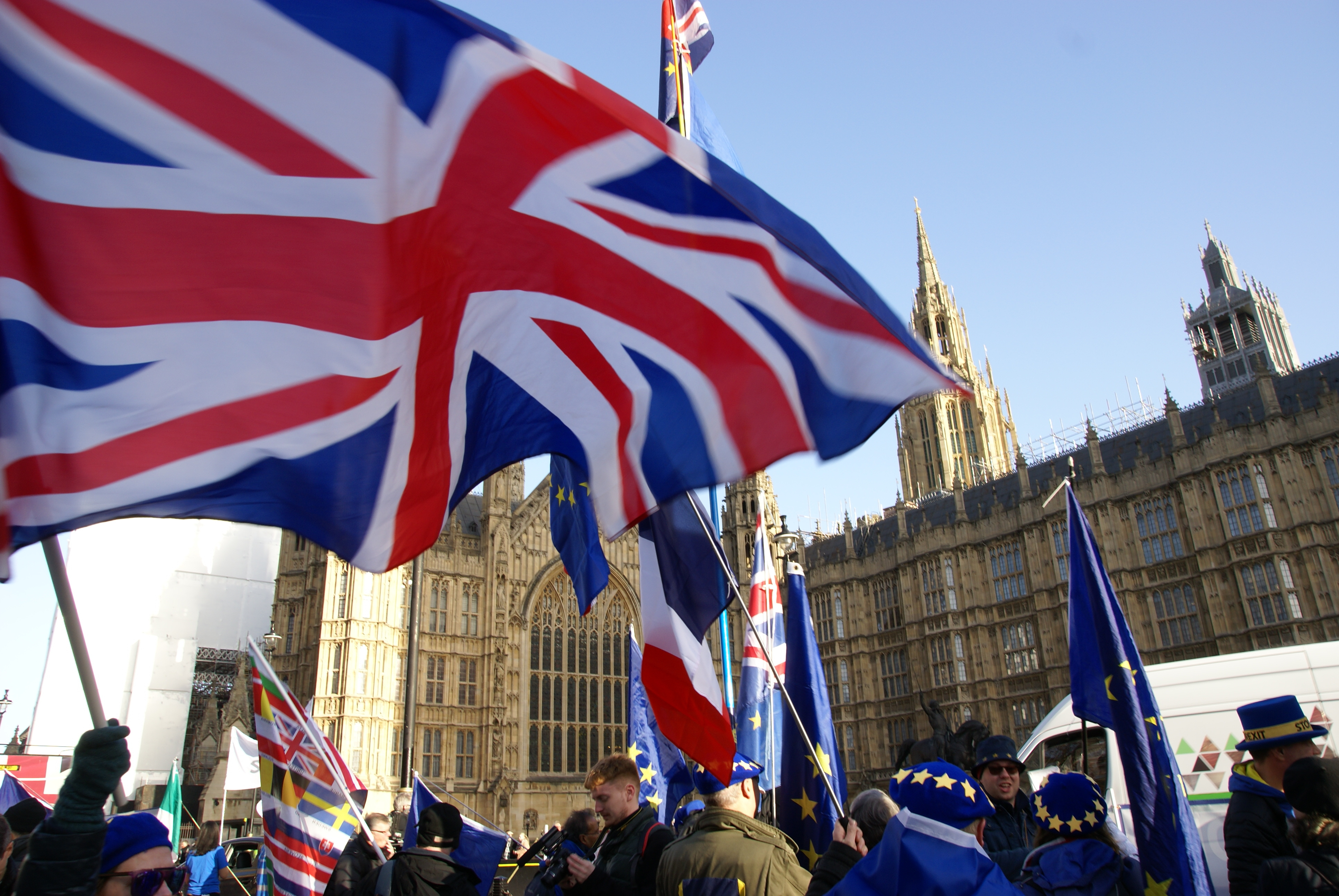
For British exporters, the central question is whether the proposed changes can translate into lower costs, fewer border delays and renewed access to European customers after years of disruption. Photo by ChiralJon, Wikimedia commons.