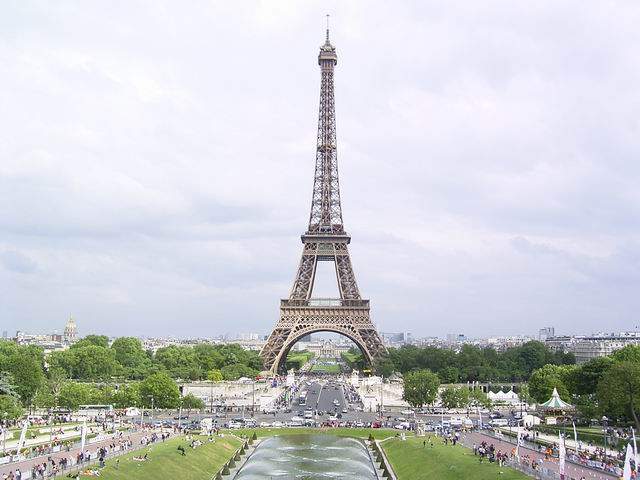
Europe should move beyond national tourism competition and build cross-border destinations that showcase the continent’s shared cultural heritage, natural landscapes and diverse travel experiences.
France’s position as one of the world’s leading tourism destinations is a remarkable achievement. Its cultural heritage, historic cities, gastronomy and internationally recognised landmarks have made the country a magnet for visitors from across the globe. However, Europe’s tourism industry could achieve even greater success if national achievements were complemented by a coordinated, pan-European approach.
The European Commission’s latest tourism initiative highlights the importance of strengthening Europe’s position as the world’s leading tourism destination. The challenge is no longer simply attracting more visitors to individual countries, but ensuring that tourism generates benefits across the continent.
From national competition to a European tourism experience
France has long demonstrated the economic and cultural value of a successful tourism strategy. Paris, the French Riviera, the Loire Valley and the country’s historic towns attract visitors with different interests, from luxury travel and gastronomy to architecture and cultural exploration.
Yet Europe’s tourism potential extends far beyond the borders of any single country.
The continent offers an extraordinary combination of cultural traditions, landscapes, historic monuments and modern cities. These assets could be promoted more effectively through tourism destinations that connect several countries and regions into a single, coherent travel experience.
For example, visitors interested in European history could explore destinations linking France, Belgium, Germany and Poland. Mediterranean tourism could connect France, Italy, Spain and Greece, while Central European routes could combine historic cities, architectural heritage and regional culinary traditions.
Such an approach would allow Europe to present itself not merely as a collection of national destinations, but as an interconnected tourism ecosystem.
Why cross-border tourism makes economic sense
A pan-European tourism strategy could deliver several important benefits.
First, it could distribute tourism revenues more evenly. Popular destinations such as Paris, Rome and Barcelona attract substantial numbers of visitors, while smaller cities, rural regions and lesser-known destinations often struggle to achieve comparable international visibility.
Connecting established tourism centres with less-visited areas could encourage travellers to extend their stays and explore more of Europe.
Second, it could help address overtourism. The concentration of visitors in a limited number of cities and regions places pressure on housing, infrastructure, public services and cultural heritage. Promoting alternative destinations and cross-border itineraries could help distribute visitor flows more sustainably.
Third, it could create new opportunities for small and medium-sized businesses. Hotels, restaurants, tour operators, transport companies, museums and cultural institutions could benefit from coordinated European marketing and improved connectivity.
The European Union already recognises the importance of addressing uneven tourism development. According to the Council of the EU, France, Spain, Germany and Italy together account for more than 60% of overnight stays in the Union. This concentration illustrates the potential for a more balanced approach to tourism development.
A European tourism brand with national identities
The idea of pan-European destinations does not mean weakening national tourism brands.
France should continue to promote its own distinctive identity, just as Italy, Spain, Germany and other European countries should retain their individual tourism strategies. National branding remains an important instrument for attracting international visitors.
The opportunity lies in combining these national identities within a broader European framework.
A visitor arriving in Paris could be encouraged to continue their journey to Brussels, Amsterdam or Luxembourg. A trip to the Alps could include destinations in France, Switzerland, Austria and Italy. A journey focused on Jewish history could connect historic communities and heritage sites across Central and Eastern Europe.
These routes could be developed through coordinated marketing, integrated travel information, improved transport connections and digital platforms that make cross-border travel easier to organise.
The objective would be to transform individual national attractions into a wider European experience.
The Commission’s strategy offers an opportunity
The European Commission’s tourism initiative provides an important opportunity to advance this approach.
The EU’s tourism sector is economically significant, contributing approximately 10% of the Union’s gross value added and supporting more than 20 million jobs. It also includes around five million businesses, the overwhelming majority of which are small and medium-sized enterprises.
A coordinated European tourism strategy could help these businesses reach international audiences more effectively.
European institutions and national governments could support the development of thematic tourism corridors, common digital information services, cross-border cultural programmes and sustainable transport connections.
The EU’s Destination Europe framework could also help strengthen the continent’s international visibility, presenting Europe as a destination offering a broad range of experiences rather than a series of competing national markets.
Europe’s competitive advantage is its diversity
France’s leadership in tourism demonstrates what a country can achieve by investing in its cultural and natural assets. But Europe’s greatest competitive advantage is its diversity.
Few regions of the world can offer such a concentration of historic cities, cultural traditions, landscapes, architectural landmarks and culinary experiences within relatively short travel distances.
The next stage of European tourism development should therefore focus on making this diversity easier to discover.
A pan-European approach would allow visitors to experience several countries during one journey, while helping regions that remain outside the traditional tourism hotspots attract new investment and visitors.
France’s success should be viewed not as a model that other European countries must compete against, but as an opportunity to build a stronger collective tourism offer.
Europe’s future as the world’s leading tourism destination may depend not only on how successfully individual countries attract visitors, but on how effectively they work together to turn the entire continent into one interconnected travel experience. Photo by User:MarkGGN. Uploaded by, Wikimedia commons.