The Democratic Party’s victory in the 2026 US midterm elections has raised hopes across Europe and other parts of the world that Washington could move towards a more moderate foreign policy, greater international
cooperation and a more predictable economic environment. The result represents a major setback for President Donald Trump, whose confrontational approach to international relations has become a source of uncertainty for global markets and America’s traditional allies.
Democrats have secured control of both the US House of Representatives and the Senate, delivering a significant political rebuke to Trump’s administration. Although the president will remain in office for another two years, the new congressional balance could substantially complicate his domestic agenda and increase the influence of political forces advocating a more conventional approach to international affairs.
For Europe, the outcome offers an opportunity to reconsider the future of the transatlantic partnership after a period marked by trade disputes, disagreements over NATO, uncertainty surrounding support for Ukraine and increasingly aggressive rhetoric towards traditional American allies.
A potential return to a more predictable American foreign policy
The international reaction to the election suggests that many political leaders see the Democratic victory as an opportunity to restore a more cooperative relationship with Washington.
European Parliament Vice-President Christel Schaldemose expressed cautious optimism, arguing that the result could strengthen support for Ukraine, advance the green transition and improve America's relations with the rest of the world.
However, she also stressed that Europe must continue developing its own capabilities and become stronger independently of the United States.
Her remarks reflect a central dilemma facing European governments: the desire to restore a reliable American partnership while recognising that Europe cannot afford to depend entirely on the political decisions of any US administration.
Norwegian Prime Minister Jonas Gahr Støre offered a similarly positive assessment, describing the election as a powerful political signal of changing attitudes among American voters.
According to Støre, emerging voices in American politics are closer to Norway's positions on climate policy, environmental protection, foreign affairs and development assistance.
These reactions suggest that a Democratic-controlled Congress could provide a stronger platform for cooperation on issues where European and American interests have increasingly diverged under Trump.
A more moderate US political environment could also benefit international financial markets. Greater predictability in trade policy, reduced geopolitical tensions and a renewed commitment to international economic cooperation would help businesses make long-term investment decisions.
Nevertheless, the election does not guarantee an immediate improvement in market conditions. The new congressional balance could create political gridlock, while Trump's administration would retain substantial executive authority.
Trump's foreign policy has become a source of international instability
The Democratic victory also highlights growing international concern about Trump's approach to America's allies.
His threats towards Denmark over Greenland, confrontational rhetoric towards Canada and changing positions on NATO and Ukraine have contributed to an increasingly uncertain geopolitical environment.
For European governments, the central concern is not simply the possibility of disagreements with Washington. It is the unpredictability of American policy itself.
The security guarantees traditionally associated with NATO have been questioned, while European countries have faced uncertainty over the future of US military assistance to Ukraine.
This has created additional pressure on European governments to increase defence spending, strengthen their military capabilities and prepare for scenarios in which American support could become less reliable.
Bernd Lange, chair of the European Parliament's International Trade Committee, described the election as a major defeat for Trump and an opportunity for greater democratic influence and dialogue.
However, Lange warned that American protectionism would not disappear simply because Democrats had won Congress. He also cautioned that a weakened Trump could become more aggressive and unpredictable.
His assessment captures the contradiction at the heart of the election: the possibility of a more constructive relationship with Washington, alongside the continuing risk of political confrontation.
Belgian Defence Minister Theo Francken also pointed to the consequences of the American political divide, warning that governing the United States could become extremely difficult in the coming years.
He identified trade policy, support for Ukraine and NATO as the principal issues European governments would need to monitor.
Europe and America have an opportunity to rebuild cooperation
The election results could create a new political environment for transatlantic cooperation, particularly in areas where European and American interests remain closely aligned.
These include:
Security and NATO: Strengthening cooperation between European and American defence institutions.
Ukraine: Maintaining international support for Ukraine and developing a more predictable framework for European security.
Trade and investment: Reducing uncertainty surrounding tariffs and international economic relations.
Climate policy: Renewing cooperation on emissions reduction, clean technologies and the green transition.
Global diplomacy: Rebuilding confidence in multilateral institutions and international partnerships.
Former US President Barack Obama also emphasised the importance of political unity following the election.
In his reaction, Obama said American voters wanted politics that brought people together rather than divided them, and leaders capable of offering concrete solutions to the challenges facing the country.
He urged Democrats to use the powers available to them to prevent further damage and prepare the ground for the future.
For European leaders, the message is clear: the election may provide an opportunity to restore a more constructive dialogue with Washington, but meaningful change will require sustained political engagement.
A new era — but not an immediate transformation
The international response has also demonstrated that America's allies are not expecting an immediate reversal of Trump's policies.
Greek government spokesman Pavlos Marinakis stressed that relations between Greece and the United States would remain strong regardless of the election outcome.
Japan's Chief Cabinet Secretary Minoru Kihara similarly reaffirmed that the US-Japan alliance remained the cornerstone of his country's foreign and security policy.
These statements underline the importance of continuity in international alliances, even when domestic political circumstances change.
South African President Cyril Ramaphosa, meanwhile, described the result as an event that could introduce a new era in world relations.
His assessment reflects the broader international significance of the vote: the election was not simply a domestic political contest, but a signal that could influence the direction of American engagement with the world.
The immediate consequences will depend on how the new Congress exercises its powers and whether the administration adjusts its approach to international relations.
Yet the political signal is already significant.
For Europe, a more moderate and predictable United States would offer an opportunity to rebuild confidence in the transatlantic partnership, improve economic cooperation and strengthen collective security.
The challenge for European leaders will be to seize that opportunity without abandoning the strategic independence that has become increasingly important in an era of geopolitical uncertainty.
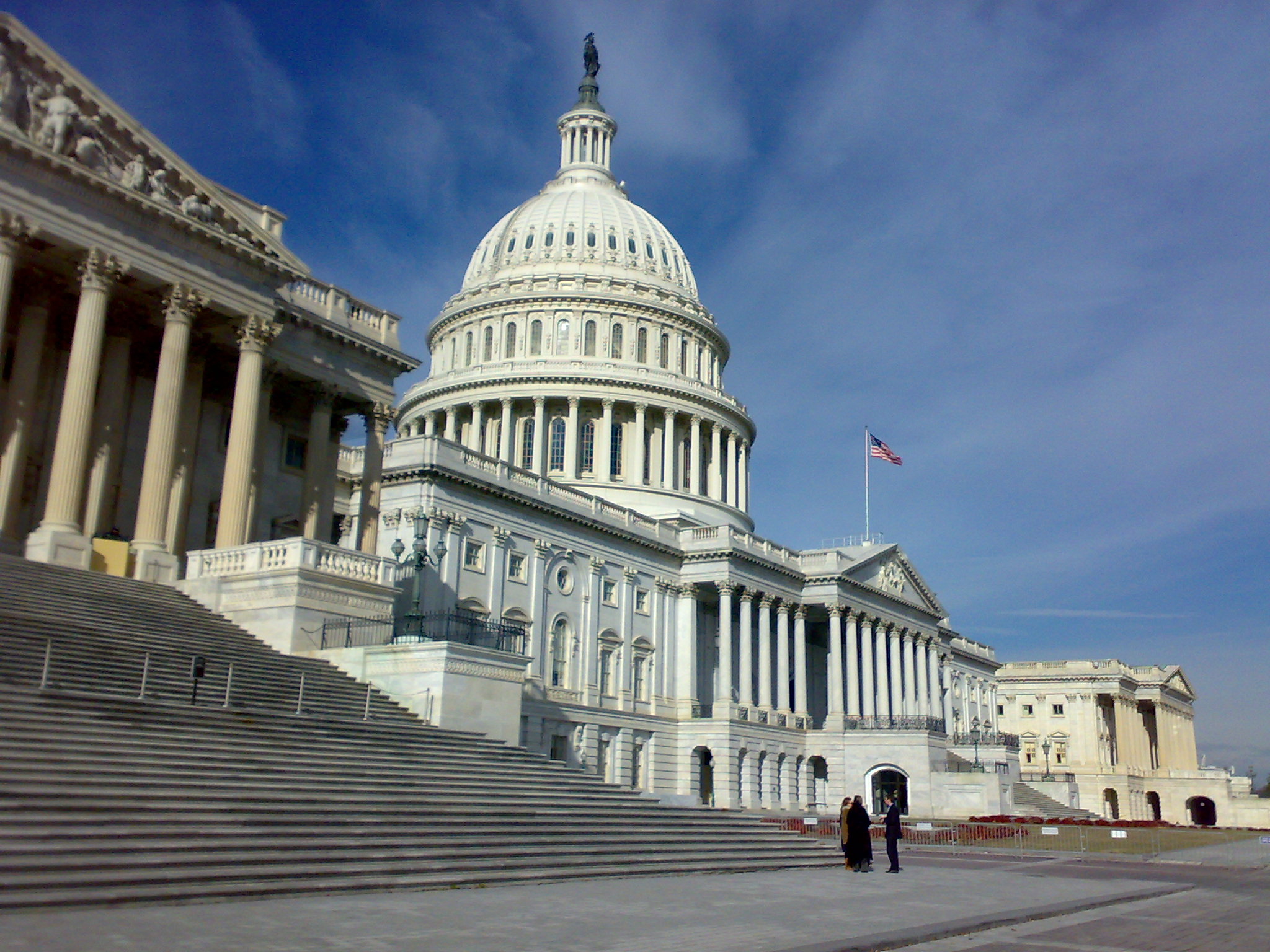
The Democratic victory may not end the era of confrontation in Washington, but it could mark the beginning of a more balanced relationship between America and its allies — one based less on political threats and more on cooperation, predictability and shared interests. Photo by GFDL, Wikimedia commons.