For the first time since Croatia joined the European Union in 2013, the prospect of admitting new members is becoming a tangible political reality. After more than a decade of enlargement fatigue, the European Union
appears ready to reconsider its borders, opening a new chapter in European integration at a time when the bloc faces considerable economic, political and security challenges.
The European Commission has identified Montenegro as the leading candidate for accession, with the Western Balkan country expected to become the European Union’s 28th member state in 2028. Albania is also advancing rapidly, while Moldova and Ukraine are pursuing their own paths towards membership. The Commission’s latest assessment suggests that enlargement, long regarded as a distant ambition, could once again become one of the EU’s defining political projects.
The timing is significant. Europe is dealing with economic uncertainty, geopolitical competition and the consequences of Russia’s war against Ukraine. At the same time, the Union must address questions about its institutional capacity, economic competitiveness and ability to make decisions in an increasingly complex international environment.
Yet postponing enlargement indefinitely may carry even greater risks. The European Commission has increasingly presented the accession process as an investment in Europe’s collective security, economic strength and geopolitical influence.
According to the Commission’s enlargement assessment published on 4 November 2026, Montenegro, Albania, Moldova and Ukraine have made substantial progress in their accession negotiations. The Commission has introduced indicative roadmaps for these four countries, establishing milestones intended to make the next stages of membership negotiations more predictable.
Montenegro: The first candidate in line
Montenegro’s progress represents a significant development for the EU enlargement process. The country has provisionally closed 21 of its 33 negotiating chapters, placing it ahead of other candidate countries.
The European Commission believes that Montenegro could provisionally close the remaining chapters by the end of 2026. The accession treaty could then be signed as early as June 2027, with membership expected in 2028, provided that reforms continue and all EU member states approve the agreement.
The Commission’s position sends a clear message to other candidate countries: the accession process can deliver results when governments maintain the necessary reform momentum.
For Montenegro, the final stage will require continued progress in the rule of law, fundamental rights, the fight against corruption and the strengthening of democratic institutions. The country must also maintain broad political support for European integration.
However, the proposed timetable is not guaranteed. The accession treaty will require ratification by all 27 existing EU member states, and outstanding bilateral issues could still complicate the process.
Nevertheless, Montenegro has emerged as the leading example of how the EU’s enlargement policy could move forward after years of stagnation.
Albania follows closely behind
The next country to watch is Albania, which has made considerable progress in its negotiations with Brussels. The European Commission has identified the country as one of the most advanced candidates and believes that accession negotiations could be concluded by the end of 2027.
This opens the possibility of Albania joining the European Union in 2029, potentially becoming the bloc’s 29th member.
The Commission has emphasised that Albania must maintain the pace of reforms, particularly in the areas of the rule of law and democratic governance. Constructive political dialogue and continued progress across the remaining negotiating chapters will be essential.
For Tirana, Montenegro’s progress provides both an incentive and a practical example. The prospect of membership is becoming increasingly concrete, but the final outcome will depend on the ability of national authorities to deliver the reforms required by the EU.
Moldova and Ukraine: A longer road towards membership
The enlargement process also has considerable implications for Moldova and Ukraine, two post-Soviet countries that have made European integration a central element of their political and economic development.
Both countries have advanced in their accession negotiations, and the European Commission has recognised their progress despite substantial challenges.
Moldova has met the conditions required to open all remaining negotiating clusters. The Commission considers that, if the current pace of reforms is maintained, the country could conclude accession negotiations by early 2028.
Ukraine has also advanced in its negotiations, despite the extraordinary circumstances created by Russia’s full-scale invasion. The Commission has highlighted the need to accelerate reforms concerning the rule of law, democratic institutions and public administration.
Kyiv’s objective of concluding accession negotiations by the end of 2028 remains ambitious, and the country faces a particularly difficult path towards membership.
The prospects for Moldova and Ukraine therefore remain more uncertain than those of Montenegro and Albania. Even if both countries make substantial progress over the coming years, their accession will depend on the completion of extensive reforms and the political willingness of EU member states to approve their membership.
Enlargement as a strategic necessity
The European Commission’s renewed emphasis on enlargement reflects a broader change in the EU’s strategic thinking.
For many years, the accession process was largely viewed through the prism of economic convergence, institutional reform and the fulfilment of membership criteria. Today, the geopolitical dimension has become increasingly important.
A larger European Union could strengthen the bloc’s position in global markets, expand its economic opportunities and increase its influence in international affairs. It could also help reinforce stability in neighbouring regions and reduce the vulnerabilities created by political uncertainty.
The Commission has also proposed a framework for gradual integration, allowing candidate countries to deepen cooperation with the EU in areas such as energy, transport, digital technologies and defence before formally becoming members.
This approach could offer practical benefits to candidate countries while they continue preparing for accession.
However, the EU itself must also prepare for enlargement. The admission of new members will raise questions about institutional representation, decision-making procedures, agricultural funding and the distribution of economic resources.
These challenges cannot be ignored, but neither can the strategic costs of leaving candidate countries in a state of permanent uncertainty.
A new chapter for European integration
The European Commission’s latest assessment suggests that the EU is moving towards a new phase of enlargement. Montenegro has emerged as the leading candidate, Albania is expected to follow, and Moldova and Ukraine are continuing their efforts to meet the requirements for membership.
For the first time since 2013, the possibility of admitting new members is no longer merely a long-term aspiration. It is becoming a concrete political objective.
The coming years will determine whether the European Union can translate this renewed ambition into reality. The process will require sustained reforms from candidate countries, political consensus among existing members and a willingness to adapt the Union’s institutions to a larger European community.
The stakes are considerable. Enlargement could strengthen Europe’s economic and geopolitical position at a moment when the international environment is becoming increasingly unpredictable.
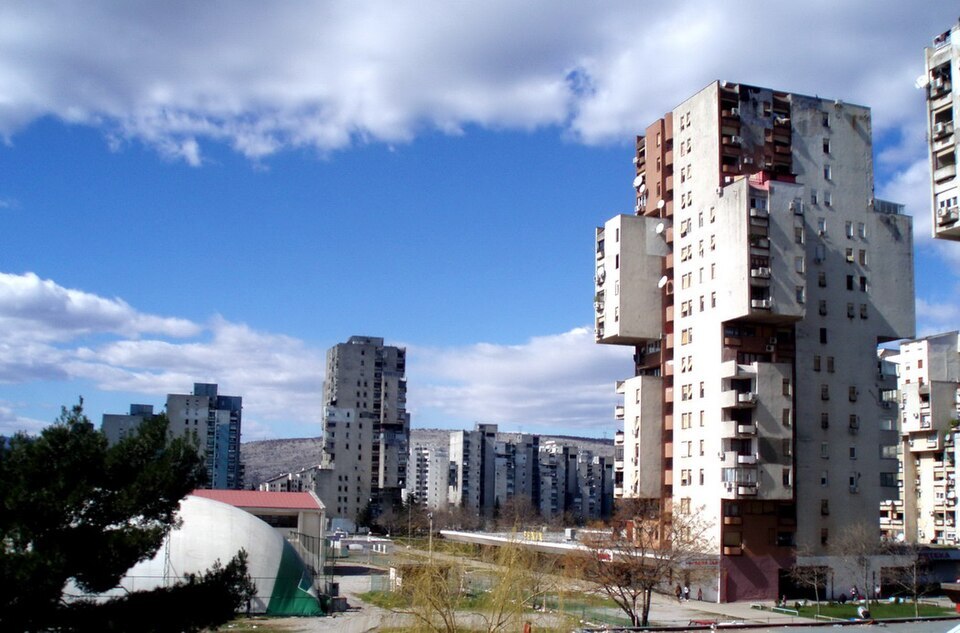
The question is no longer simply whether the European Union is ready to expand. It is whether Europe can afford to postpone enlargement any longer. Photo by Bratislav, Wikimedia commons.