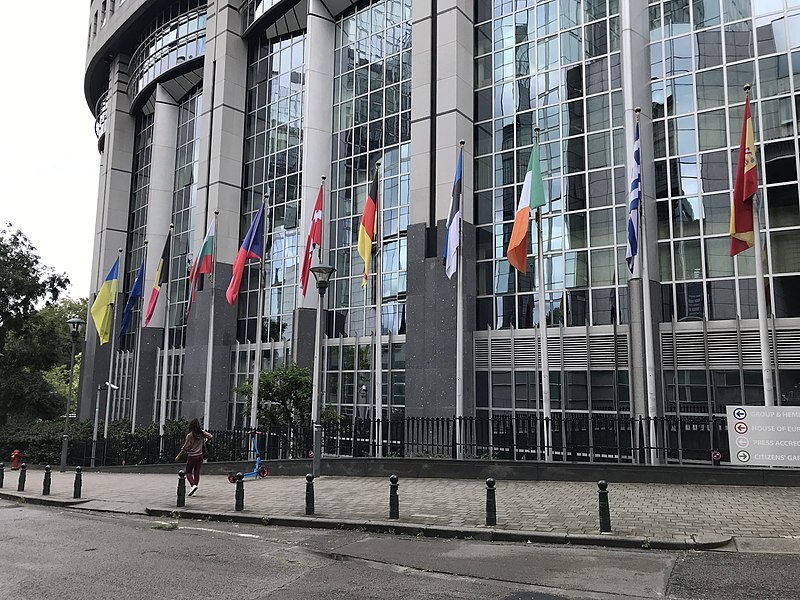
The recovery of air travel and the growing popularity of road tourism are putting renewed pressure on Europe’s climate ambitions. Against this backdrop, the European Parliament is examining how to reduce CO₂
emissions while supporting the transition towards cleaner vehicles and a more competitive automotive industry.
The end of the COVID-19 pandemic brought a significant revival of mobility across Europe. As restrictions disappeared, millions of people returned to airports, resumed international travel and began exploring European destinations by car. While this recovery has been welcomed by the tourism and transport industries, it has also created new challenges for the continent’s environmental objectives.
The sharp increase in flights, together with the expansion of road travel, has contributed to renewed pressure on Europe’s transport-related emissions. Aviation remains a particularly difficult sector to decarbonise, while the growing number of journeys undertaken by private vehicles continues to raise questions about the sustainability of European tourism.
For many Europeans, travelling by car offers flexibility, convenience and access to destinations that are difficult to reach by public transport. However, the environmental consequences of this trend are becoming increasingly important as the European Union seeks to achieve its long-term climate targets.
The challenge is therefore not simply to reduce the number of journeys, but to transform the way Europeans travel. Cleaner vehicles, more efficient transport systems and stronger incentives for sustainable mobility are increasingly central to the European climate debate.
European Parliament considers new CO₂ targets
Against this background, the European Parliament discussed proposals concerning CO₂ emissions from cars and vans on 4 November, focusing on adjusted emissions targets and additional incentives for cleaner vehicles.
The debate forms part of broader efforts to reconcile the European Union’s climate commitments with the economic pressures facing its automotive industry. European manufacturers are confronting intense competition, particularly from Chinese electric-vehicle producers, while also dealing with the costs of transitioning towards lower-emission technologies.
The proposals seek to provide manufacturers with greater flexibility in meeting emissions requirements while maintaining incentives for the development and production of cleaner vehicles.
Among the key elements is a proposed adjustment to the 2035 CO₂ emissions reduction target for new passenger cars. Members of the European Parliament’s Environment Committee supported reducing the target from a 100% reduction to 87.5%, with additional compensation mechanisms linked to the use of low-carbon steel produced in the EU.
The proposal would allow manufacturers to use credits associated with European low-carbon steel to compensate for a limited share of their remaining emissions. The overall reduction could reach 95% when these credits are taken into account.
For light commercial vehicles, the proposed 2035 reduction target would be lowered from 100% to 80%. The proposals also include adjustments to intermediate targets for vans.
These changes reflect a growing political debate over how quickly Europe should move towards zero-emission mobility and how much flexibility should be granted to manufacturers during the transition.
The Environment Committee adopted its position by 48 votes in favour, 30 against and two abstentions. The proposal is expected to be considered by the full European Parliament in December 2026 before negotiations with EU member states.
Incentives for European-made clean vehicles
A central element of the proposed framework is the introduction of additional incentives for electric vehicles manufactured in the European Union.
Under the proposal, compact electric cars produced in Europe and measuring no more than 4.2 metres in length would receive a so-called super-credit. For the purpose of calculating manufacturers’ average fleet emissions, these vehicles would count as 1.4 cars rather than one.
Highly energy-efficient electric vehicles produced in the EU could receive a similar incentive, counting as 1.2 vehicles. Additional incentives would apply to certain vehicles registered under social leasing schemes.
The proposals also seek to strengthen the European automotive supply chain by rewarding the use of low-carbon steel manufactured within the Union.
Such measures could help stimulate demand for European-made electric vehicles, encourage investment in cleaner production and strengthen the competitiveness of the continent’s automotive sector.
The broader objective is to ensure that climate policy and industrial policy reinforce one another, rather than placing European manufacturers at a disadvantage in an increasingly competitive global market.
A transition that must extend beyond the automotive industry
Although the proposed changes focus on cars and vans, Europe’s transport emissions cannot be addressed through automotive policy alone.
The post-pandemic recovery of aviation demonstrates the scale of the challenge. As international tourism expands, the aviation sector must also find ways to reduce its environmental impact. This requires technological innovation, more efficient aircraft, sustainable aviation fuels and policies that encourage the development of lower-emission transport alternatives.
Road tourism presents a similar challenge. The growing popularity of private-car travel highlights the importance of investing in reliable rail connections, accessible public transport and charging infrastructure for electric vehicles.
At the same time, the transition must remain economically and socially accessible. Cleaner mobility should not become a privilege available only to wealthier households. Affordable electric vehicles, effective public transport and well-designed incentives will be essential to ensuring that the benefits of decarbonisation reach communities across Europe.
The European Parliament’s debate reflects the difficult balance between environmental responsibility, industrial competitiveness and consumer choice. The decisions taken in the coming months will help determine whether Europe can accelerate the transition towards cleaner transport while preserving the strength of its automotive industry.
As flights and road journeys continue to recover, the need for a comprehensive European strategy has become increasingly clear. Reducing emissions from cars is an important part of that strategy, but achieving Europe’s climate ambitions will ultimately require a broader transformation of the continent’s transport system.