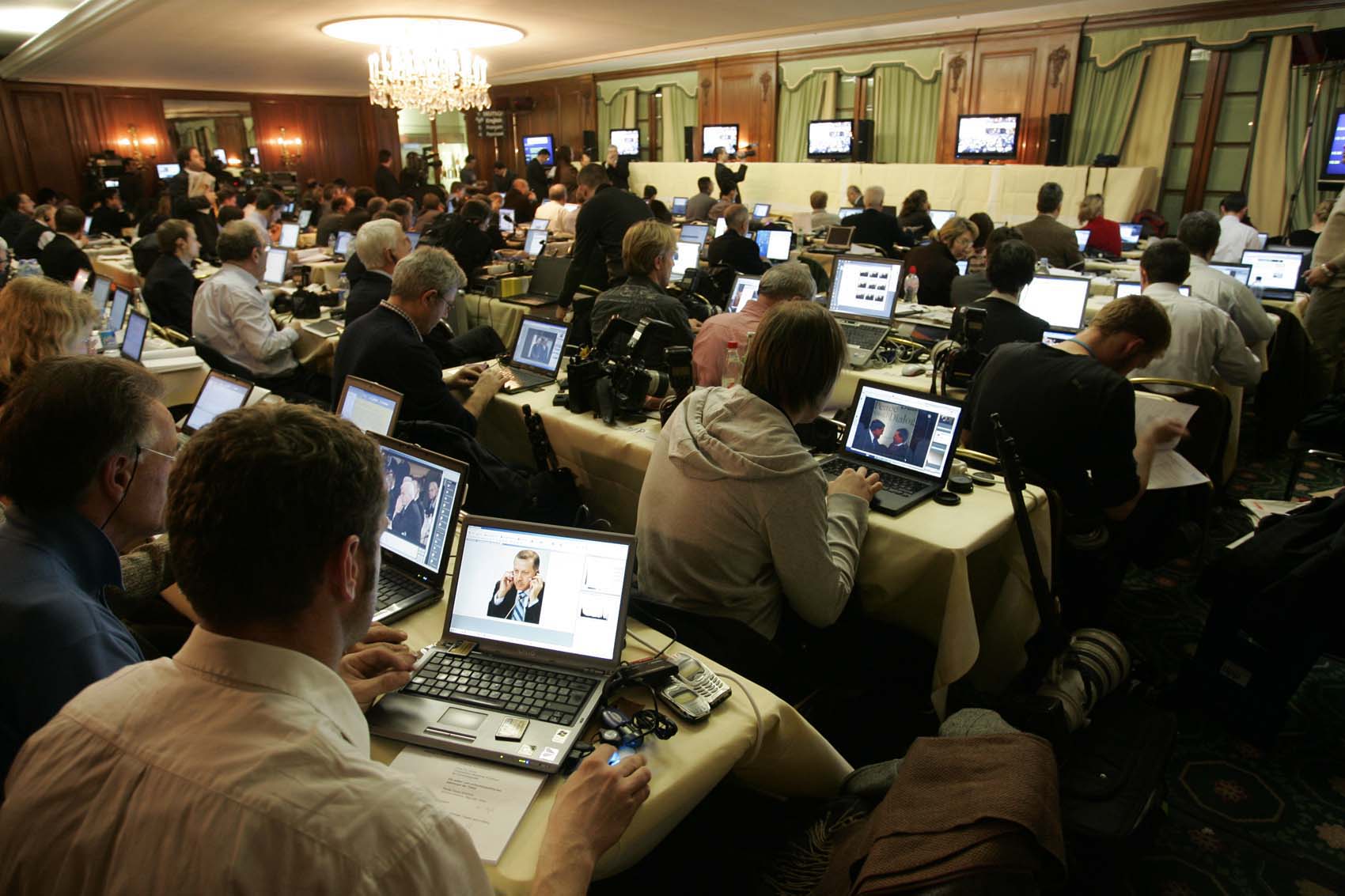
In today's increasingly competitive information environment, managing a company's, organisation's or country's public image requires considerably more than traditional advertising and conventional public relations.
Establishing a strong reputation, gaining public trust and securing a lasting presence in the media have become essential elements of successful communication strategies. One of the most important instruments in this process is media pitching — the professional practice of presenting stories, ideas and newsworthy information to journalists and editorial teams in order to secure meaningful media coverage.
Media pitching has long been an integral part of the work of leading international PR agencies. However, as media consumption habits change and editorial organisations face growing pressure to produce relevant, credible and engaging content, this activity is developing into a more sophisticated professional discipline. An emerging field, increasingly described as Journalistic PR, is bringing together the principles of journalism, strategic communications and reputation management.
Unlike traditional public relations, which often focuses on distributing press releases and promoting clients' messages, Journalistic PR places a much stronger emphasis on understanding how newsrooms operate, what editors consider newsworthy and how journalists select the stories they publish. Its central objective is not simply to attract attention but to establish productive, long-term relationships between organisations and the media.
From traditional PR to Journalistic PR
The development of Journalistic PR reflects a fundamental transformation in the relationship between public relations professionals and the media. Journalists receive an enormous volume of information every day, while editorial teams operate under considerable financial and time constraints. Consequently, simply sending a press release is no longer sufficient to guarantee coverage.
Professional media pitching requires a much deeper understanding of editorial priorities, audience interests, current affairs and the individual working styles of journalists. PR specialists must be capable of identifying the right media outlets, approaching the appropriate editors and presenting information in a format that corresponds to the editorial requirements of each publication.
This approach involves several interconnected activities: researching media markets, developing newsworthy narratives, preparing exclusive stories, arranging interviews, organising expert commentary and maintaining professional contacts with journalists. It also requires an understanding of the distinction between editorial independence and commercial communication. Successful Journalistic PR respects the editorial judgement of journalists while helping organisations communicate information that has genuine public interest.
The discipline is particularly important in international communications. Companies seeking to enter foreign markets, government institutions promoting investment opportunities and organisations working to improve their international reputation all need access to reliable media channels. Their messages must be adapted to different national contexts, political environments, cultural expectations and editorial traditions.
As a result, Journalistic PR is becoming an important component of modern image management, offering organisations a more strategic and sustainable alternative to occasional publicity campaigns.
Germany's leadership and the European market
Germany has established itself as one of Europe's most developed markets for professional communications and media relations. German PR agencies have considerable experience in combining strategic reputation management with sophisticated media engagement, reflecting the country's strong corporate sector, international business connections and influential media landscape.
The German approach is characterised by an emphasis on professional standards, carefully researched communication strategies and long-term relationships with editorial organisations. This experience provides an important reference point for the development of Journalistic PR across the wider European market.
Other European countries are also developing specialised expertise in this area. Poland, in particular, has become an increasingly interesting market for international communications, benefiting from its growing economy, expanding business sector and strategic position between Western Europe and Central and Eastern Europe.
Within this environment, agencies capable of combining international media experience with an understanding of different European markets have an important competitive advantage.
Iris Consulting Group: 15 years of experience in professional communications
One of the Polish agencies specialising in this field is Iris Consulting Group, which is celebrating its 15th anniversary in 2026. Its milestone reflects the growing importance of professional media relations and the demand for specialised communications services in an increasingly interconnected European information space.
The agency's focus on Journalistic PR reflects a broader industry trend: organisations increasingly need communication partners who understand not only public relations but also the practical realities of journalism and editorial decision-making.
For a specialised agency, this means approaching media relations as a continuous professional process rather than a series of isolated publicity activities. Successful pitching requires research, an understanding of the publication's audience, the ability to recognise relevant editorial opportunities and the preparation of compelling material that journalists can independently assess.
Fifteen years in the communications market also provide an opportunity to consider how dramatically the media environment has changed. The expansion of digital publications, the growing influence of social media, the emergence of new information platforms and the increasing competition for audience attention have fundamentally altered the work of both journalists and PR professionals.
In this environment, the value of experienced media relations specialists lies in their ability to build bridges between organisations and editorial communities. They must understand the objectives of their clients while respecting the professional standards, independence and responsibilities of journalists.
The future of Journalistic PR
The development of Journalistic PR is likely to become even more significant in the coming years. The rapid expansion of artificial intelligence, the growing volume of online content and the spread of misinformation are making credible editorial coverage increasingly valuable.
Organisations can no longer rely exclusively on their own communication channels to establish authority and public trust. Independent media coverage, expert commentary and meaningful engagement with journalists remain important instruments for building a credible public profile.
At the same time, the profession demands higher standards of transparency, accuracy and professional ethics. Media pitching must offer genuine informational value rather than simply attempt to secure favourable publicity. The most successful PR agencies will therefore be those capable of understanding both sides of the communication process: the strategic objectives of their clients and the editorial needs of the media.
The experience of the German PR market, the development of specialised agencies in Poland and the 15th anniversary of Iris Consulting Group illustrate the growing professionalisation of this field.
Journalistic PR is no longer simply an additional service offered by public relations companies. It is emerging as a distinct approach to strategic communications, in which knowledge of journalism, professional media relationships and reputation management become inseparable.
Summary
Media pitching has become one of the essential instruments of modern image management, helping businesses, institutions and organisations establish their presence in the media and build public credibility. Its development is giving rise to a specialised discipline known as Journalistic PR, which combines strategic public relations with a detailed understanding of editorial processes, journalists' requirements and media market dynamics.
Germany is among the leading European markets in this area, while Poland is developing its own specialised expertise. One example is Iris Consulting Group, a Polish agency specialising in this field and celebrating its 15th anniversary in 2026. Its anniversary highlights the growing importance of professional media relations and the increasing demand for communications specialists who can connect organisations with editorial communities.
As digital media, artificial intelligence and information competition continue to transform the communications landscape, Journalistic PR is likely to play an increasingly important role in international reputation management. Photo by Kai Mörk , Wikimedia commons.