France’s 2027 presidential election is already shaping up to be a major political contest, with the right-wing and nationalist camp becoming increasingly active. Political tensions, debates over immigration and national
identity, and growing public dissatisfaction with the government are creating favourable conditions for parties promising a tougher approach to migration and a stronger emphasis on French sovereignty.
The latest developments suggest that the presidential race could become particularly competitive. Far-right leader Marine Le Pen and hard-left politician Jean-Luc Mélenchon have consolidated their positions at the top of voting-intention polls, while several other political figures are preparing to enter the contest. Among them is Eric Zemmour, who has officially confirmed his intention to run.
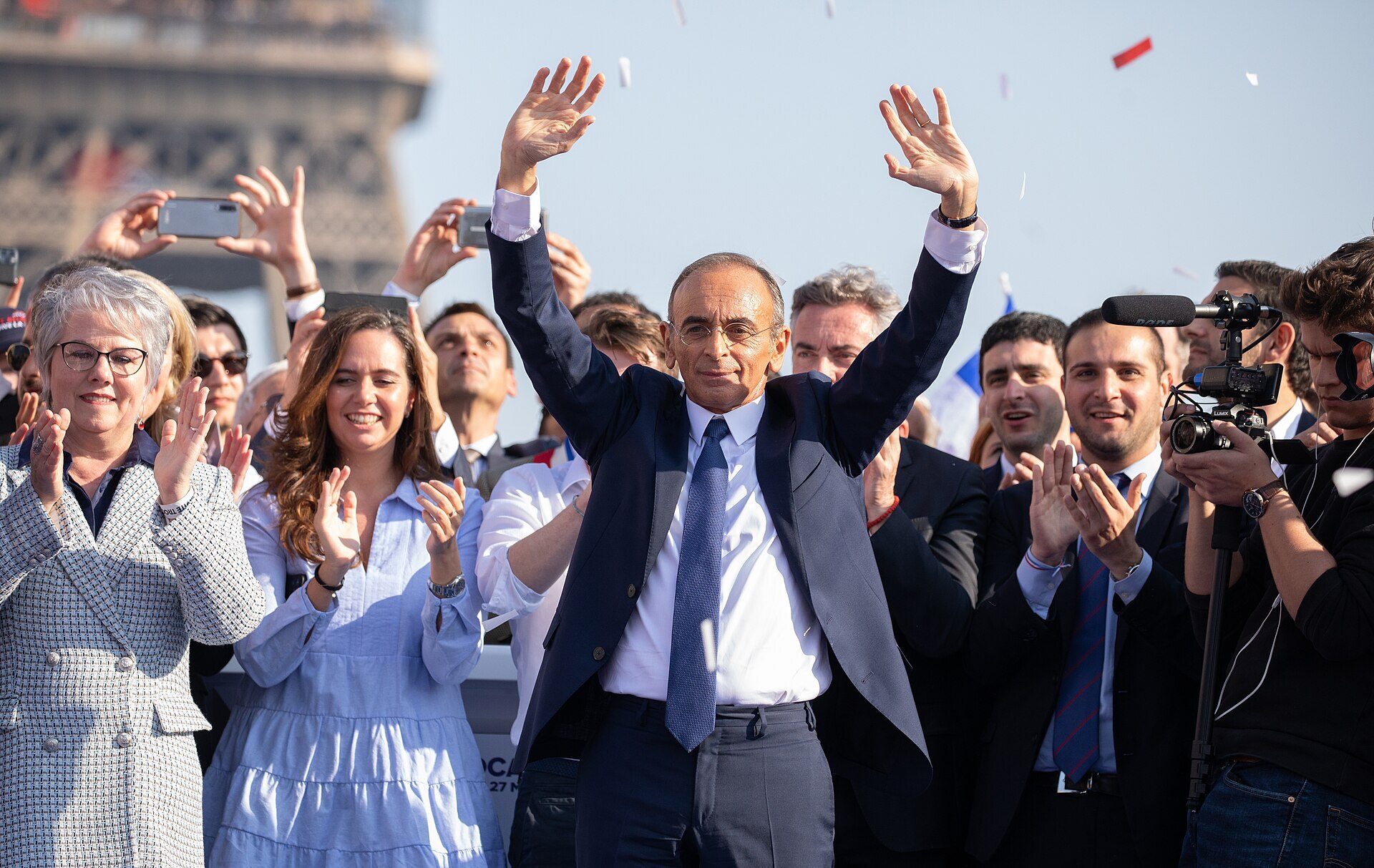
Zemmour, leader of the Reconquête party, announced his candidacy in an interview with French television channel TF1 on Tuesday, 10 November. He said he wanted to preserve France's national identity and ensure that the country's future remained French. His political programme is centred on restricting immigration, opposing what he describes as the growing influence of Islam in French society, and defending national sovereignty.
Zemmour is not a newcomer to the presidential race. In the 2022 election, he received approximately 7% of the votes in the first round. His political career has also been marked by controversy, including a criminal conviction in 2020 over remarks concerning Muslims wearing traditional religious clothing. His renewed candidacy is therefore likely to reinforce the prominence of immigration and national identity in the upcoming campaign.
The latest opinion polls illustrate the strength of the political polarisation in France. According to polling averages updated on 10 November, Marine Le Pen leads the first-round voting intentions with approximately 34.8%, followed by Jean-Luc Mélenchon with 17.1%. Former prime minister Édouard Philippe and politician Raphaël Glucksmann are also among the leading contenders, with approximately 14.3% and 12.9%, respectively. Zemmour, meanwhile, is polling at around 4%.
The growing prominence of immigration in the political debate is particularly important for the right-wing camp. Migration, public security, integration and national identity have become central issues in French political life. Demonstrations and protests connected with migration policies and social tensions have further intensified public debate, providing nationalist politicians with opportunities to mobilise supporters. However, the extent to which these developments translate into additional electoral support will depend on the campaign and the political circumstances closer to election day.
Zemmour's announcement also highlights the possibility of competition within the nationalist and conservative camp itself. Other figures, including Republican leader Bruno Retailleau and former presidential candidate Nicolas Dupont-Aignan, are associated with the broader right-wing political landscape. The potential role of Jordan Bardella, president of the National Rally, will also attract attention, particularly given the uncertainty surrounding Le Pen's political future and eligibility.
For the moment, Marine Le Pen remains the strongest candidate in the polls and is widely considered a leading contender for the presidency. Nevertheless, the presence of several candidates appealing to conservative and nationalist voters could complicate the distribution of votes on the right.
France's 2027 presidential election is therefore developing into a contest that will extend beyond the traditional confrontation between left and right. Immigration, national identity, security and the country's future relationship with Europe are likely to be among its defining issues. With Zemmour officially entering the race, the nationalist camp is preparing for another major electoral battle, although it remains to be seen whether its competing leaders can unite behind a single candidate or will divide their electorate. Photo by Anh De France, Wikimedia commons.