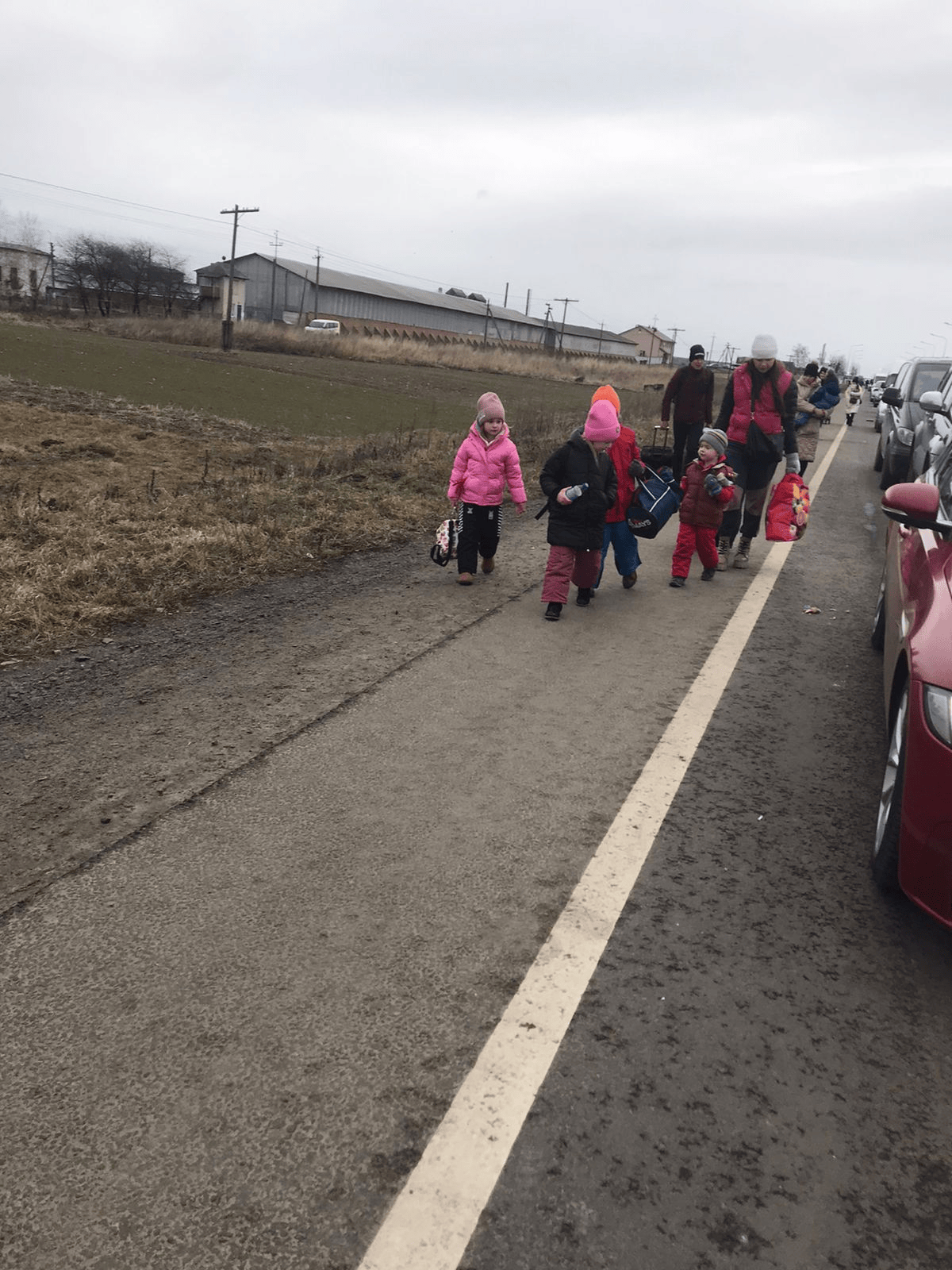
The number of Ukrainian refugees living in European countries remains one of the most significant challenges facing European migration and social policy. According to the latest official Eurostat statistics released on
10 November 2026, approximately 4.37 million people who fled Russia’s full-scale invasion of Ukraine were benefiting from temporary protection in the European Union at the end of September. Although the overall figure recorded a monthly decline, the situation remains dynamic, with further changes expected during the coming winter months as security and humanitarian conditions in Ukraine continue to deteriorate.
The Eurostat report shows that on 30 September 2026, a total of 4,370,000 non-EU citizens who had fled Ukraine were registered under the EU's temporary protection mechanism. This represented a decrease of 61,055 people, or 1.4%, compared with the end of August.
Germany remained the largest host country, accommodating 1,300,070 Ukrainian refugees, equivalent to 29.7% of the EU total. Poland ranked second, with 858,545 beneficiaries (19.6%), followed by Czechia, which hosted 391,720 people (9.0%).
The distribution of Ukrainian refugees across Europe demonstrates the different pressures facing national migration systems. Germany, Poland and Czechia continue to play particularly important roles in providing accommodation, access to education, healthcare and employment opportunities for displaced Ukrainians.
At the same time, the September statistics reveal some significant changes between individual EU countries. Between the end of August and the end of September, the number of people receiving temporary protection increased in 25 of the 27 EU Member States. The largest increases were recorded in Germany (+5,515), Romania (+3,900) and Italy (+2,505).
In contrast, Poland registered a substantial decrease of 80,850 beneficiaries, or 8.6%, while Czechia recorded a decline of 6,640 people, equivalent to 1.7%. These developments illustrate how refugee movements and the distribution of temporary protection beneficiaries continue to change across Europe.
The figures also highlight the considerable differences between EU countries when population size is taken into account. Czechia recorded the highest proportion of Ukrainian temporary protection beneficiaries, with 35.9 people per 1,000 inhabitants. Slovakia followed with 28.0, while Cyprus registered 27.4. The EU average stood at 9.7 beneficiaries per 1,000 inhabitants.
The demographic composition of the refugee population is another important aspect of the Eurostat report. Ukrainian citizens accounted for 98.5% of all people benefiting from temporary protection in the EU at the end of September. Adult women represented 44.1% of beneficiaries, adult men accounted for 27.9%, and minors made up 28.0%. These figures underline the particular importance of European policies supporting refugee families, children and women, including access to education, employment, housing and social services.
Despite the temporary fluctuations in monthly figures, the humanitarian consequences of Russia's war against Ukraine continue to require a coordinated European response. The approaching winter is expected to create additional challenges for millions of Ukrainians, particularly if Russian attacks on energy infrastructure, heating systems and civilian facilities intensify. Such developments could encourage further displacement and increase pressure on European countries receiving refugees.
The EU has already taken steps to ensure greater legal certainty for displaced Ukrainians. On 15 July 2026, the European Council agreed to extend temporary protection for people fleeing Russia's war against Ukraine until 4 March 2028. The extension means that beneficiaries will continue to enjoy protection under the relevant European framework beyond the previous deadline of March 2027.
The temporary protection mechanism, introduced through Council Implementing Decision 2022/382 on 4 March 2022, provides a coordinated response to the mass displacement caused by Russia's aggression. It allows eligible Ukrainian refugees to reside legally in EU countries and provides access to employment, education, healthcare and other essential services.
The latest Eurostat figures demonstrate that the Ukrainian refugee crisis remains a long-term European challenge rather than a temporary emergency. While individual countries are experiencing changes in the number of beneficiaries, the overall scale of displacement continues to require substantial financial, administrative and humanitarian resources.
As winter approaches, European governments and EU institutions will need to maintain their readiness to respond to possible new waves of displacement. Ensuring stable legal protection, adequate accommodation and integration opportunities will remain essential not only for Ukrainian refugees but also for the social and economic resilience of the European Union as a whole.