Swiss chocolatier Lindt & Sprüngli has underestimated the impact of steep price increases on consumer demand, its executive chairman has acknowledged, following a decision to remove its chief executive amid growing concerns over the company’s performance.
Ernst Tanner told Swiss newspaper NZZ am Sonntag that the company had miscalculated how much customers would be willing to pay after soaring cocoa costs forced it to increase prices. The admission comes as the premium chocolate maker faces mounting pressure in key European markets, particularly Germany.
Cocoa prices surged to record levels from 2024 onwards, prompting Lindt to pass higher production costs on to consumers. However, the company raised prices beyond what some customers were prepared to accept, weakening demand for its products.
“We misjudged how customers would respond to price increases,” Tanner said, acknowledging that Lindt had overestimated its ability to increase prices without affecting sales. He added that some consumers had come to regard the company’s chocolate as too expensive in recent months.
The difficulties have weighed heavily on investor confidence. Lindt’s shares have fallen by more than 25% since the beginning of the year following several reductions to its financial outlook. The company has also faced increased scrutiny over its strategy after the recent departure of its chief executive.
Despite the setbacks, Tanner rejected suggestions that the business was experiencing a wider crisis. He maintained that Lindt remained fundamentally strong and argued that its shares were now undervalued.
The chairman pointed to continued growth prospects in the Americas and the Far East, where the company expects to achieve its annual sales growth target of between 6% and 8%.
Lindt has already begun reducing prices on selected products in an effort to encourage consumers to buy more. Tanner said further price adjustments could become possible if cocoa costs return to more normal levels, potentially giving the company greater flexibility to rebuild sales volumes.
The pricing difficulties have also raised questions about leadership and accountability at the Swiss manufacturer. Tanner, 80, served as chief executive from 1993 to 2016 and has held the chairmanship for more than three decades.
However, he dismissed suggestions that he should step aside, arguing that he still had important work to complete to restore the company’s performance. He said he would consider moving on to the next stage of his life once Lindt was back on track.
The company does not plan to introduce group-wide job cuts, according to Tanner, who said the priority remained to continue expanding the business rather than scale back operations.
Nevertheless, management is preparing to tighten financial discipline. Employees in the Germany, Switzerland and Austria region will face reduced bonuses because the business has failed to meet its targets.
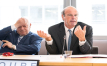
The latest developments highlight the challenge facing premium chocolate producers as they attempt to balance higher raw material costs with consumers’ growing sensitivity to prices. For Lindt, restoring demand without undermining its premium positioning will be a key test as it seeks to recover momentum in Europe while maintaining growth in other markets. Photo by Tammy Green from Chicago, USA, Wikimedia commons.