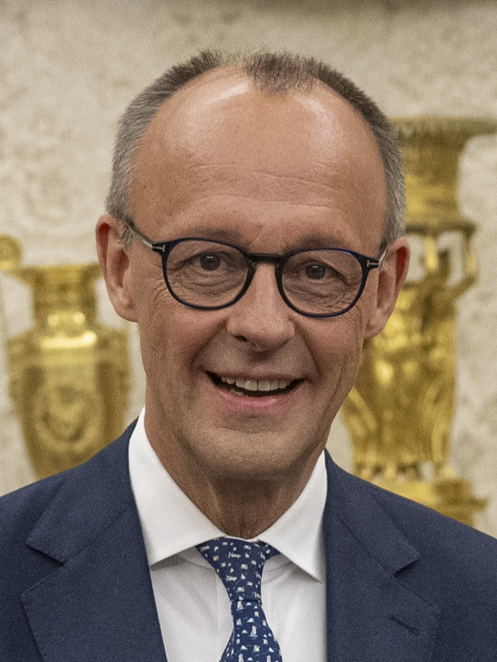
German Chancellor Friedrich Merz has called on his conservative allies to close ranks amid mounting political tensions, warning that Germany faces serious security challenges from domestic extremism and what he described as persistent Russian attempts to undermine the country’s stability.
Addressing a conference of the Christian Social Union (CSU) on Saturday, Merz stressed that Germany was confronting an increasingly difficult political and security environment, requiring a united response from the governing coalition and its conservative partners.
He questioned how Germany could protect its democratic freedoms and security across Europe while confronting threats from both within its borders and abroad. Merz specifically accused Russia of attempting to destabilise Germany on a daily basis.
Relations between Berlin and Moscow have deteriorated sharply since Russia launched its full-scale invasion of Ukraine in February 2022, reaching their lowest point in decades. Moscow has repeatedly rejected allegations that it is conducting a coordinated campaign of hybrid operations against Germany and other European countries.
The chancellor’s remarks come at a particularly difficult moment for his government. Recent regional election defeats in eastern Germany have intensified pressure on the governing parties, with the far-right Alternative for Germany (AfD) securing first place in two states and the left-wing Left Party emerging as the leading force in Berlin.
Merz has also experienced a significant decline in public approval, while disagreements have grown both within the governing coalition and between the two conservative parties that form its core: the Christian Democratic Union (CDU), led by Merz, and its Bavarian counterpart, the CSU.
Although the CDU and CSU have frequently clashed over political strategy and policy, the parties have traditionally maintained their alliance, which remains central to Germany’s conservative political landscape.
The conference provided a visible demonstration of the relationship’s continuing importance. Delegates responded enthusiastically when Merz mentioned Ilse Aigner, a prominent CSU politician whom the Bavarian party has put forward as a possible successor to President Frank-Walter Steinmeier, whose term is due to end next year.
The CDU has not yet formally backed Aigner’s candidacy, and sources within the party indicate that it is still considering whether to nominate its own candidate for the largely ceremonial presidency. The issue highlights the potential for further disagreements between the conservative allies despite their shared governing responsibilities.
Merz sought to reinforce cooperation during his appearance, praising CSU ministers serving in the federal government and expressing appreciation for the party’s leader, Markus Söder.
However, he adopted a firm position on another contentious issue: whether conservatives should consider working with the AfD. Despite the party’s strong performance in regional elections and its leading position in national opinion polls, Merz again rejected proposals from within conservative circles to pursue cooperation with the far right.
He declared that politicians who vote alongside the AfD have no place in the conservative Union, reaffirming his opposition to any political arrangement that would bring the CDU and CSU closer to the party.
The chancellor also criticised the prospect of the Social Democratic Party (SPD) and the Greens entering a governing coalition with the Left Party in Berlin. He accused the latter of tolerating antisemitism within its ranks, a charge the Left Party rejects, denying that antisemitism is a systemic problem within the organisation.
Beyond the immediate political disputes, Merz argued that Germany must accelerate long-delayed structural reforms to restore economic momentum and rebuild public confidence in state institutions.
He identified the pension system, taxation and social welfare as key areas requiring change, presenting reform as essential to addressing the country’s economic difficulties and ensuring the long-term sustainability of public finances.
The speech underscored the challenge facing Merz as he attempts to maintain unity among his conservative allies, manage tensions within the governing coalition and counter the growing electoral appeal of parties on both the far right and the left.
With public dissatisfaction rising and political divisions deepening, the chancellor faces increasing pressure to demonstrate that his government can deliver economic improvements while safeguarding Germany’s democratic institutions and security. Photo by The White House, Wikimedia commons.