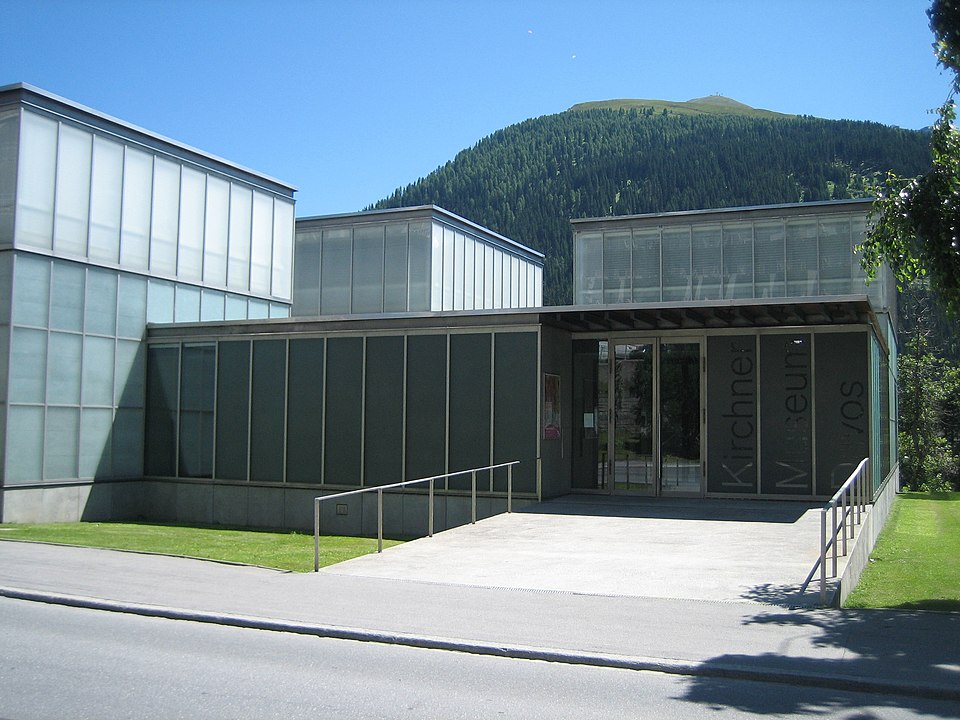
For the first time ever, works by Pablo Picasso and Ernst Ludwig Kirchner are being shown side by side in a single exhibition — and it’s happening high in the Swiss Alps.
The long-awaited show at the Kirchner Museum Davos is being hailed as one of the institution’s most ambitious and historically significant projects to date. Opening on February 15 and running until May 3, the exhibition brings together around 100 paintings, sculptures, drawings and prints from the two masters of modern art. For museum director Katharina Beisiegel, the aim is clear: not to crown a winner, but to explore a visual dialogue that art history has too long kept apart.
A vision nearly a century in the making The idea behind the exhibition dates back to 1933, when Kirchner himself expressed the hope for an international show where his work would be presented alongside Picasso’s. He would not live to see it realised. It has taken 93 years — and three intense years of negotiations — to bring that vision to life. Major loans were secured from leading Picasso collections in Barcelona, Madrid, Paris and Berlin, making the exhibition a logistical as well as curatorial feat. Some works had to be transported under extraordinary conditions, underscoring the scale of the undertaking.
Shared beginnings, diverging paths Born just a year apart — Kirchner in Aschaffenburg in 1880 and Picasso in Málaga in 1881 — both artists showed remarkable talent from an early age, encouraged by their families. Visitors encounter their childhood drawings displayed together, revealing early influences of Impressionism and an already striking confidence of hand. As their careers evolved, their artistic paths diverged. Kirchner embraced an intense, expressive style marked by bold colours and emotional urgency, while Picasso’s Cubist period favoured structure, analysis and a more restrained palette.
Yet after the First World War, their work began to converge again, with both artists moving toward flatter, rounder and more organic forms. A major moment for art history Set against the dramatic backdrop of Davos, the exhibition is more than a crowd-pleasing pairing. It is a serious art-historical statement, offering fresh insight into how two of the most influential artists of the 20th century developed in parallel — sometimes in contrast, sometimes in quiet harmony. “Both artists played a crucial role in shaping modern art and influencing generations that followed,” Beisiegel said.
“Showing the full breadth of their achievements side by side allows us to see them anew.” For visitors, the result is a rare and compelling encounter — one that finally fulfils Kirchner’s long-held wish and reframes Picasso not as a solitary giant, but as part of a richer, more complex artistic conversation. Photo by upload by Adrian Michael, Wikimedia commons.