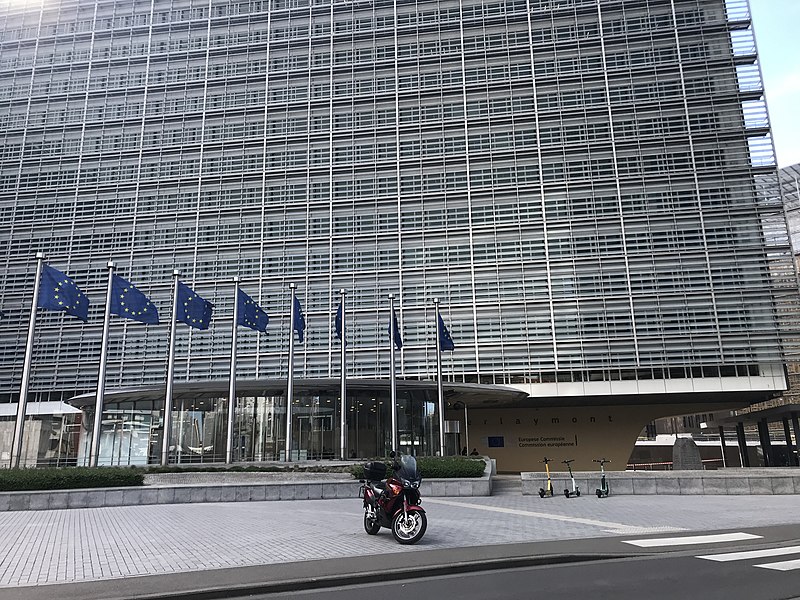
The European Commission has endorsed Germany’s final €6 billion payment request under the EU’s post-pandemic recovery programme, bringing the country a step closer to receiving the full €30.3 billion allocated to modernise its economy, accelerate decarbonisation and expand digital public services.
The Commission announced on 25 October that it had completed a positive preliminary assessment of Germany’s fourth and final request under the Recovery and Resilience Facility (RRF), the central funding instrument of the European Union’s NextGenerationEU recovery package.
The request covers the completion of Germany’s remaining reforms and investment commitments. Once the payment receives final approval, the country will have fulfilled all 127 milestones and targets set out in its national recovery and resilience plan, allowing it to access its entire allocation of EU grants.
The Commission confirmed that Germany had satisfactorily completed eight milestones and 19 targets associated with the final instalment. These measures focus on cleaner transport and energy infrastructure, improving the energy performance of residential buildings, and bringing healthcare and public administration further into the digital age.
Investment in greener transport and energy
A substantial share of the final payment is linked to initiatives designed to reduce carbon emissions and improve energy efficiency.
Under the programme, Germany supported energy-efficiency renovations in more than 36,000 buildings and financed over 1,100 projects aimed at reducing emissions from district heating networks.
Funding also contributed to the purchase of more than 3,000 electric and fuel-cell buses, over 550 commercial electric vehicles and the installation of 1,000 charging stations.
These investments form part of Germany’s broader efforts to cut emissions from transport and buildings while advancing the transition towards a more sustainable energy system.
Digital upgrades for hospitals and public services
The recovery programme has also supported the modernisation of government administration and healthcare infrastructure.
Measures have enabled public authorities to retrieve standardised information securely from government databases, helping reduce paperwork and administrative demands on individuals and businesses.
In the healthcare sector, financial support has been directed towards digitalisation projects involving more than 1,600 hospitals across Germany. The initiatives are intended to improve the integration of healthcare services, modernise hospital systems and increase operational efficiency.
The reforms are part of the EU’s wider strategy to strengthen public services through digital technology and make essential administrative processes more accessible and effective.
Support for hydrogen and semiconductor innovation
Germany’s recovery funding has additionally backed research and industrial development in strategically important technologies, including renewable hydrogen and microelectronics.
One of the flagship initiatives supports an Important Project of Common European Interest focused on renewable and low-carbon hydrogen. The programme aims to expand production capacity and help overcome technological and economic barriers that have slowed the development of hydrogen as a clean energy source.
Research projects supported through the initiative are intended to advance hydrogen technologies and improve their commercial viability.
Funding has also supported German companies participating in a separate European initiative covering microelectronics and communication technologies. The project seeks to strengthen Europe’s capacity to produce advanced processors and other electronic components while reducing dependence on external suppliers.
The development of more efficient chips is expected to contribute to lower energy consumption, more reliable electronic devices and improved sensor performance.
Final approval still required
Although the European Commission has issued a positive preliminary assessment, the €6 billion payment has not yet been formally authorised.
The assessment has been forwarded to the Council’s Economic and Financial Committee, which has four weeks to provide its opinion. The Commission must subsequently adopt the final payment decision before the funds can be disbursed.
Germany submitted its final payment request on 25 September 2026. The proposed instalment will bring total payments under the Recovery and Resilience Facility to €30.3 billion, including €2.5 billion previously provided as pre-financing.
If the remaining approval steps are completed, Germany will receive 100% of the grant funding allocated under its recovery and resilience plan.
EU recovery programme approaches its conclusion
The decision comes as the Recovery and Resilience Facility approaches the end of its operational period. Member States were required to complete outstanding milestones and targets by 31 August 2026 and submit their final payment requests by the end of September.
Established as part of NextGenerationEU, the facility was designed to help EU countries recover from the economic consequences of the COVID-19 pandemic while accelerating structural reforms, supporting climate objectives and investing in digital transformation.
Germany’s final request represents a significant step towards completing its programme, with investments spanning energy-efficient buildings, low-emission transport, modernised public services and technologies intended to strengthen Europe’s industrial competitiveness.
The country’s full allocation will be delivered once the Council-related assessment process and the Commission’s final payment decision have been completed.