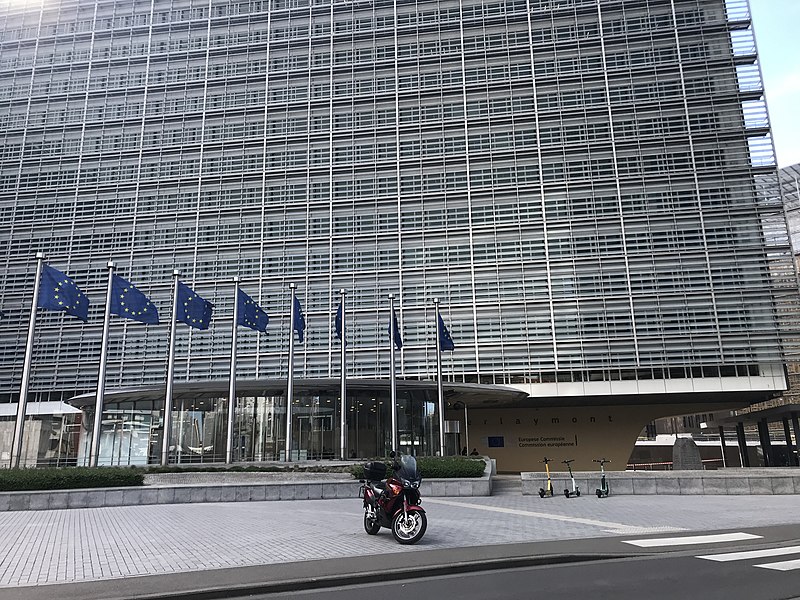
The European Commission has unveiled plans to significantly expand the powers and operational capacity of Frontex, the EU’s border and coast guard agency, with the aim of strengthening external border security,
accelerating the return of people without legal permission to remain in the bloc and improving the response to migration-related emergencies.
Under the proposed reforms, Frontex’s standing corps would gradually grow to 30,000 officers, supported by a new European Border and Return Reserve, additional technological capabilities and a rapid-response force designed to intervene during crises at the EU’s external borders.
The Commission argues that although the EU has made progress in managing migration, the changing geopolitical and security environment requires closer coordination between member states and stronger European-level operational support.
According to the Commission, irregular border crossings have fallen by more than half over the past two years, while the EU’s return rate has risen to more than 30%. Brussels believes further improvements will depend on strengthening cooperation among national authorities and making deportation procedures more efficient.
European Commission President Ursula von der Leyen said the EU must be able to protect its external borders and determine the conditions under which people enter the Union. She said the proposed changes would enable Frontex to provide member states with more effective assistance, including in carrying out returns.
Frontex to expand its personnel and equipment
The proposed regulation would substantially increase the agency’s resources and give it greater flexibility to support national border authorities.
The Commission plans to build the standing corps to 30,000 officers. This expansion would include a new reserve of 17,000 border and return personnel available for deployment when member states require additional assistance. The plan also builds on the agency’s existing workforce and personnel seconded by national governments.
Frontex would receive greater authority to acquire, lease and jointly own equipment, as well as organise joint procurement with member states. It could also act as a central purchasing body for advanced digital systems and artificial intelligence-enabled tools.
The Commission says pooling resources at European level would help ensure more consistent border management standards across the bloc, particularly when individual countries face pressures beyond their own operational capacity.
Agency to take a more active role in deportations
A central element of the reform is the expansion of Frontex’s responsibilities in returning non-EU nationals who have no legal right to remain in the Union.
The agency would establish a dedicated Return Coordination Centre to collect operational information, analyse trends and help national authorities plan and coordinate return procedures. Its support would cover the entire process, from identifying individuals and providing counselling on voluntary departure to organising return operations and assisting with reintegration.
The proposals would also allow Frontex to provide technical and operational assistance to non-EU countries conducting returns. Under specific agreements and subject to fundamental rights and international standards, the agency could help organise transfers of people from one third country to another.
The Commission presents these measures as a way to improve the effectiveness and cost-efficiency of return operations, which remain a major challenge for European migration policy.
Rapid-response force planned for border emergencies
The reform would introduce new mechanisms to help the EU identify emerging threats and respond more quickly to sudden increases in border pressure.
A new Quick Reaction Force would be available for rapid deployment to external borders during emergencies. Frontex’s executive director could decide to deploy the force following a request from a member state facing a crisis.
The agency would also establish an Online Monitoring and Response Centre, tasked with monitoring publicly accessible social media content to identify developments that could affect external border management. It would also support action against illegal online content associated with border-security risks.
In addition, national authorities would face a requirement to report significant incidents affecting EU borders within 24 hours through the EUROSUR information-sharing network. The Commission says faster information exchange would help European authorities identify emerging situations and coordinate a response before they escalate.
The proposals draw on lessons from recent border emergencies, including the crisis in Ceuta, where migration pressures highlighted the need for stronger coordination and faster operational support.
Digital system to streamline return procedures
Alongside the proposed expansion of Frontex, the Commission has presented a separate regulation to digitalise return, readmission and reintegration procedures across the EU.
The initiative aims to modernise the administration of return cases through a common digital interface, reducing paperwork, speeding up procedures and improving the collection and exchange of information between national authorities.
The new framework would also strengthen Frontex’s role in developing the EU’s digital infrastructure for return management. The Commission says the system would need to comply with data-protection requirements and safeguard fundamental rights.
The proposal follows the entry into force of a new EU Return Regulation on 16 October and is intended to help national authorities implement the updated rules more efficiently.
Parliament and Council to examine proposals
The two legislative proposals will now be considered by the European Parliament and the Council of the European Union. Both institutions must agree on the measures before they can become law.
The Commission has pledged to support negotiations and advance the reforms, which form part of its broader migration and border-management agenda for 2024–2029.
Established in 2005, Frontex supports EU member states and Schengen-associated countries in managing external borders, tackling cross-border crime and returning people who do not have the right to remain in the EU. The agency also assists in search-and-rescue operations and efforts to save lives at sea.
Its mandate has expanded considerably since the current regulatory framework took effect in 2019, amid challenges including the COVID-19 pandemic, Russia’s full-scale war against Ukraine and the use of migration pressure at the EU’s external borders.
The Commission maintains that effective border management and a functioning return policy are essential to protecting the Schengen area. It says the expanded agency must continue to operate in accordance with fundamental rights and respect for human dignity.