The European Union is preparing to significantly expand investment in Australia's critical minerals industry as Brussels accelerates efforts to secure alternative supplies of raw materials essential for advanced
manufacturing, clean energy and defence technologies.
EU Ambassador to Australia Lawrence Meredith has indicated that European financial institutions and businesses are increasingly looking to Australia as a strategic partner capable of helping the bloc reduce its dependence on Chinese-controlled mineral supply chains.
Speaking on Tuesday, Meredith described the prospects for closer economic cooperation as particularly promising, pointing to recent developments in trade negotiations, investment financing and security partnerships.
The anticipated investment expansion follows a landmark free trade agreement reached between Australia and the European Union in March, bringing eight years of negotiations to a conclusion. The agreement is expected to eliminate tariffs on nearly all traded products while creating more favourable conditions for European companies seeking access to Australia's mineral resources.
Once the agreement receives formal approval and ratification, expected in early 2027, the existing 5.5% European tariff on critical minerals will be abolished.
Meredith believes the removal of these trade barriers could fundamentally change the commercial relationship between the two economies, encouraging new investment projects and strengthening industrial cooperation.
European Investment Bank Could Play Central Financing Role
Alongside the trade agreement, Brussels and Canberra are approaching another important milestone in their economic relationship.
According to Meredith, negotiations are nearing completion on a memorandum of understanding between Australia and the European Investment Bank (EIB), which could become a major financial instrument supporting European investment in Australian resource projects.
The arrangement would potentially facilitate funding for mineral extraction, refining facilities and processing infrastructure, helping Australian producers develop projects capable of supplying European industries.
The initiative forms part of a broader European strategy to strengthen economic security by diversifying access to strategically important materials.
China currently occupies a dominant position in the global processing of numerous critical minerals, creating vulnerabilities for European manufacturers that depend on reliable supplies of these resources.
Brussels increasingly regards this concentration of supply chains as an economic and geopolitical risk, particularly as international competition intensifies over technologies essential to the energy transition and military modernisation.
Australia, with its extensive mineral deposits, established mining industry and close political ties with Europe, is emerging as one of the EU's preferred partners.
However, the European investment strategy extends beyond Australia. Brazil, Canada and South Africa are also among the resource-rich countries attracting attention from Brussels.
Billions Earmarked for Strategic Raw Materials
The European Commission has proposed allocating up to €10 billion to critical raw materials initiatives within a broader €409 billion competitiveness fund.
The proposed funding forms part of discussions over the EU's next long-term budget, covering the period from 2028 to 2034.
Although the final allocation remains subject to political negotiations, the proposal illustrates the growing importance European policymakers attach to securing essential industrial inputs.
European investment is expected to target not only mining operations but also the infrastructure required to transform raw minerals into materials suitable for industrial production.
This approach reflects a recognition that access to mineral deposits alone does not guarantee supply-chain independence.
Refining and processing capacity has become an increasingly important element of global competition, particularly because many countries possessing substantial mineral reserves still depend on overseas facilities to prepare those resources for manufacturing.
For Australia, attracting European capital into downstream processing could create opportunities to move beyond its traditional role as an exporter of unprocessed mineral commodities.
Australia Shifts Focus Towards Domestic Processing
The prospect of increased European investment coincides with Australia's decision to revise its national critical minerals strategy.
Canberra announced on Tuesday that the updated strategy would place greater emphasis on refining and processing, reflecting growing concerns about supply-chain resilience and intensifying international competition for investment.
The revised approach is intended to strengthen Australia's position in global mineral markets while encouraging the development of higher-value industrial activities.
European policymakers are initially concentrating on three categories of materials identified as priorities for Australia's strategic reserve: gallium, antimony and rare earth elements.
These resources are particularly important because of their applications across advanced electronics, renewable energy systems, aerospace technologies and defence equipment.
Gallium is widely used in specialised semiconductors and electronic components, while antimony has applications in batteries, industrial materials and military technologies.
Rare earth elements are essential for manufacturing high-performance magnets used in electric vehicles, wind turbines and sophisticated defence systems.
By developing alternative sources of these materials, the EU hopes to reduce exposure to potential disruptions in international trade and strengthen the resilience of European industries.
Meredith also stressed that the speed at which Australian companies advance projects through their initial development stages will influence how quickly European investment can be deployed.
Projects that demonstrate commercial viability and progress through planning and regulatory procedures are likely to be better positioned to attract international financing.
Defence Cooperation Adds Strategic Importance
The expanding economic relationship between Australia and the EU is increasingly connected to broader security and defence cooperation.
The two partners have established a security and defence partnership, reflecting their shared interest in strengthening strategic industries and developing more resilient technological supply chains.
Many critical minerals have applications in both civilian and military technologies, making their availability increasingly important for national security.
European efforts to expand defence production are expected to generate additional demand for specialised raw materials used in military electronics, communications systems, aerospace equipment and other advanced technologies.
Under its ReArm Europe initiative, the EU aims to mobilise up to €800 billion for defence-related investment by 2030.
The scale of this programme highlights the importance of establishing reliable access to industrial materials as European governments seek to strengthen their defence capabilities.
For Australia, closer cooperation with European defence manufacturers could open new commercial opportunities while reinforcing its role as a supplier of strategically significant resources.
The free trade agreement is therefore being viewed in Brussels as more than a conventional arrangement designed to increase bilateral commerce.
It is also part of a wider effort to deepen political, technological and security cooperation between Europe and the Indo-Pacific region.
Research Partnership Could Strengthen Industrial Ties
Another important development is Australia's expected participation in Horizon Europe, the EU's flagship research and innovation funding programme.
Australia is on course to join the initiative in 2027, potentially creating additional opportunities for cooperation between universities, research institutions, technology companies and industrial organisations.
Participation could strengthen collaboration in areas such as advanced materials, clean energy, industrial innovation and emerging technologies.
Closer scientific cooperation would complement European investment in Australia's mineral sector by supporting technological development across the supply chain.
It could also help both partners improve mineral processing techniques, develop more efficient industrial technologies and accelerate innovation in strategically important sectors.
The combination of trade liberalisation, investment financing, defence cooperation and scientific partnerships suggests that Australia is becoming an increasingly important component of Europe's long-term economic strategy.
A New Phase in EU-Australia Relations
Meredith characterised 2026 as a transformational year for relations between Australia and the European Union, citing progress across several areas of cooperation.
The conclusion of free trade negotiations, the anticipated financing agreement with the European Investment Bank and the prospect of Australian participation in Horizon Europe have collectively created momentum for a more ambitious partnership.
For Brussels, the relationship offers an opportunity to diversify supply chains, strengthen industrial competitiveness and reduce strategic dependence on China.
For Canberra, European investment could support the expansion of domestic processing industries, attract international capital and create new export opportunities.
Nevertheless, the scale and timing of future investment will depend on several factors, including the ratification of the trade agreement, the availability of European financing and the commercial readiness of Australian projects.
With both sides increasingly aligning their economic and security priorities, Meredith expects cooperation to accelerate further in 2027.
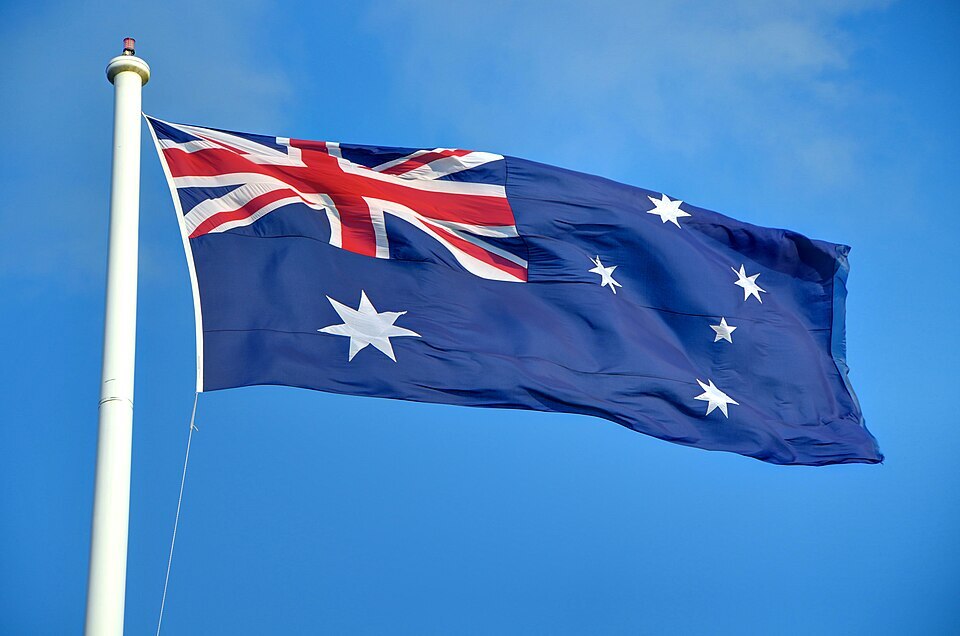
The emerging partnership reflects a broader transformation in international resource markets, where access to critical minerals is becoming an increasingly decisive factor in industrial competitiveness, technological leadership and geopolitical influence. Photo by Lachlan Fearnley, Wikimedia commons.





