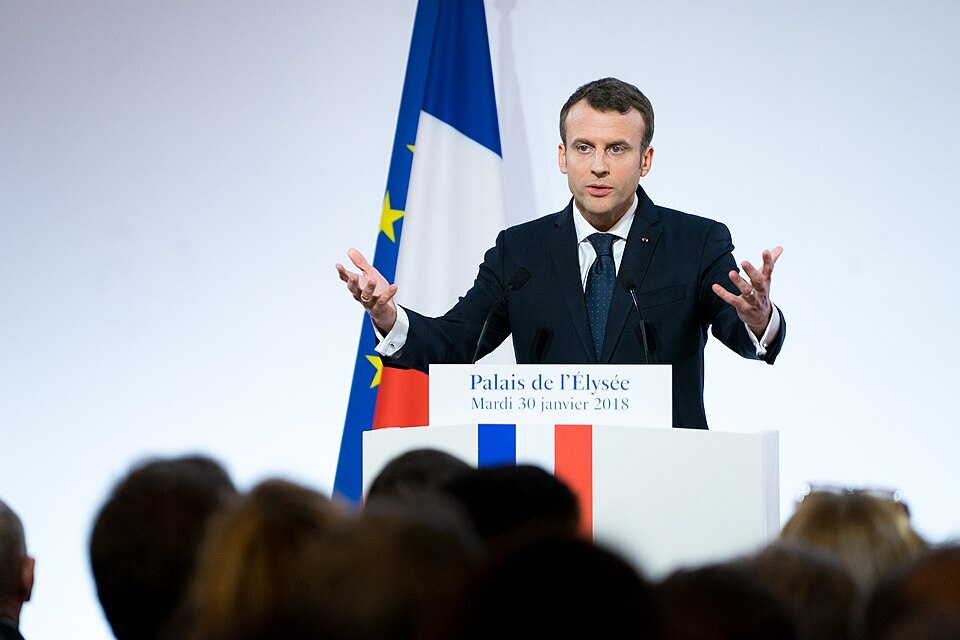
French student leaders have vowed to continue demonstrations despite a series of government concessions aimed at addressing grievances over education, as protests expand nationwide and threaten to deepen
France’s political and economic instability.
The movement, initially driven by dissatisfaction with the education system, has attracted support from trade unions and activists associated with the Yellow Vest movement. The growing unrest is creating a major challenge for President Emmanuel Macron’s minority government as it struggles to restore order while facing mounting pressure over public finances.
Following talks with government officials in Paris on October 26, student representatives said the proposed measures did not go far enough to address their demands.
“Not all our demands were met. We’ll go on for as long as it takes,” said Louis Letoublon, one of the representatives of France’s high school students.
The government’s response includes commitments to limit class sizes in certain secondary schools, provide €4 billion in loans for school renovations and replace the university admissions system by 2028. Students have criticised the existing admissions arrangements for what they regard as social inequalities in access to higher education.
The package also provides for €1 billion in investment in university campuses, increases in student grants in line with inflation and the creation of an additional 15,000 places in higher education institutions.
Education Minister Edouard Geffray acknowledged the need for action, saying the government had to address the growing pressure on the education system.
However, officials have yet to disclose the total cost of the measures, raising questions about how they will be financed. France is already facing difficult negotiations over its 2027 budget, with borrowing requirements and a national debt approaching 120% of gross domestic product severely restricting the government’s room for manoeuvre.
Political tensions rise ahead of November demonstrations
The concessions have so far failed to persuade demonstrators to abandon their campaign. Protests have continued following violent disturbances nine days earlier, when unrest spread across dozens of French cities and raised concerns about the authorities’ ability to maintain public order.
Macron acknowledged on October 26 that further disturbances were likely over the coming weekend, ahead of a larger nationwide demonstration planned for November 5.
During a visit to Marseille, where he surveyed damage caused by Saturday’s protests and thanked emergency workers, the president pledged to maintain security measures. He also called for efforts to move demonstrations away from city centres.
The unrest is unfolding against an increasingly difficult political backdrop. Macron’s minority government must contend with public dissatisfaction, limited fiscal flexibility and growing support for the far right ahead of next year’s presidential election.
Marine Le Pen, the leading candidate in current polling, appears to be benefiting from concerns about public safety and perceptions that the government is struggling to contain the disorder.
An opinion poll published on Sunday placed Le Pen at between 32% and 33.5%, comfortably ahead of her nearest rival, hard-left leader Jean-Luc Mélenchon, on 17%. The survey indicated that Le Pen would be well positioned to defeat Mélenchon in a second-round vote expected in early May.
The political implications of the demonstrations extend beyond the immediate dispute over education, potentially reshaping the electoral landscape as France approaches a crucial presidential contest.
Clashes between political groups add to security concerns
The scale of Saturday’s disturbances has also prompted concerns about confrontations between rival political movements.
Interior Minister Laurent Nuñez said authorities had arrested 1,435 people across the country during the demonstrations. He also reported an emerging pattern of organised far-right groups confronting far-left activists in several cities.
According to Nuñez, nationalist and identity-based movements had mobilised under the stated aim of protecting businesses. In cities including Nice and Montpellier, he said, organised groups had specifically targeted activists associated with the far left.
The confrontations add another dimension to the unrest, increasing the risk that demonstrations originally centred on education could become broader clashes between opposing political factions.
Authorities now face the challenge of preventing further violence while allowing peaceful protest, particularly as organisers prepare for the next nationwide mobilisation.
Retailers warn of growing economic damage
The continuing demonstrations are also taking a toll on local businesses, with shopkeepers reporting reduced sales and temporary closures following recent violence.
Alain Di Crescenzo, head of the CCI France network of chambers of commerce and industry, said many retailers had remained closed as a precaution after the disturbances on October 17. The precautionary shutdowns had resulted in substantial losses for businesses already operating under difficult conditions.
He warned that the prolonged unrest was leaving shopkeepers exhausted and discouraged while undermining local commercial activity.
Financial markets have also been sensitive to the political turmoil. A sell-off in French government bonds paused on Monday after Moody’s decided not to downgrade the country’s sovereign credit rating on Friday. Nevertheless, continued instability could complicate efforts to manage public borrowing and restore investor confidence.
With student leaders rejecting the government’s concessions as insufficient, the next round of demonstrations is likely to prove a critical test for Macron’s administration. The government must now balance demands for education reform with the need to contain public spending, protect businesses and prevent further violence.
The November 5 mobilisation could become a decisive moment in determining whether the authorities can regain control of the situation or whether the protests will develop into a wider challenge to the government’s political authority. Photo by Jacques Paquier, Wikimedia commons.