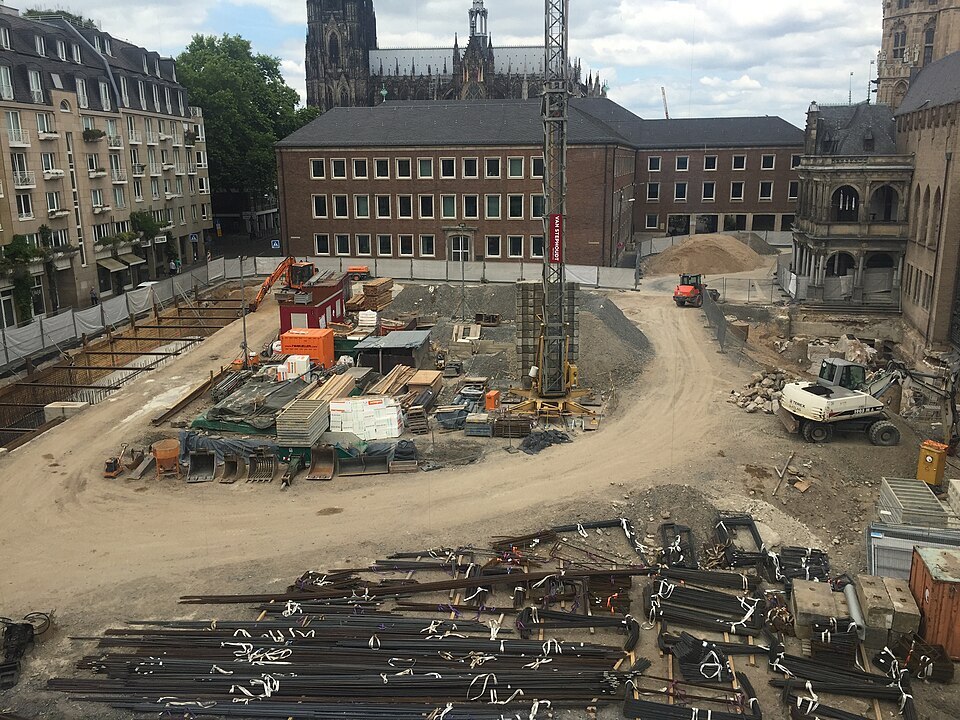
Construction activity across the European Union accelerated in August 2026, with output rising by 2.0% compared with July, while production in the euro area increased by 1.8%, according to preliminary figures
published by Eurostat.
The latest data indicate a stronger monthly performance than in July, when construction output edged up by just 0.2% in the euro area and declined by 0.1% across the EU.
Compared with August 2025, construction production rose by 1.4% in the euro area and 2.6% across the 27-member bloc, pointing to an overall improvement in sector activity over the past year.
Specialised construction drives monthly growth
The August expansion was primarily supported by specialised construction activities, which recorded the strongest performance among the main construction segments.
In the euro area, specialised construction output increased by 2.5% month on month. However, production in building construction fell by 0.4%, while civil engineering activity declined by 2.1%.
A similar pattern emerged across the EU. Specialised construction activities grew by 2.3%, offsetting declines of 1.0% in building construction and 0.2% in civil engineering.
Hungary and Germany record the strongest monthly gains
National figures reveal substantial differences in construction performance across the EU. Hungary registered the largest monthly increase, with production surging by 14.0% in August. Germany followed with growth of 9.3%, while Romania recorded a 7.2% rise.
At the other end of the scale, Slovenia experienced the sharpest contraction, with construction output falling by 5.1%. Slovakia followed with a 4.9% decline, while Italy recorded a decrease of 2.9%.
Annual trends show contrasting performance across sectors
Despite the overall year-on-year increase in construction production, developments differed considerably between individual segments.
In the euro area, building construction output was 3.7% lower than in August 2025, while civil engineering production remained unchanged. Specialised construction activities, by contrast, expanded by 3.1%.
Across the EU, building construction recorded an even steeper annual decline of 4.1%. Civil engineering production increased by 2.8%, while specialised construction activities grew by 2.9%.
These figures suggest that the overall improvement in construction output has been supported by specialised activities and, at the EU level, civil engineering, while building construction continues to face pressure.
Romania leads annual growth
Romania recorded the strongest year-on-year expansion among the Member States for which data were available, with construction production rising by 39.0% in August 2026 compared with the same month a year earlier.
Hungary ranked second, with an increase of 22.0%, followed by Finland, where output grew by 12.7%.
Several countries, however, reported lower production than a year earlier. France recorded the largest annual decline, at 7.8%, followed by Slovakia, down 4.9%, and Spain, down 4.3%.
The latest Eurostat figures highlight an uneven recovery across Europe's construction industry. Although monthly output strengthened in August and annual production increased in both the euro area and the EU, continued weakness in building construction and diverging national trends point to significant differences in the sector's performance across the bloc.
Source: Eurostat, preliminary construction production estimates for August 2026. Photo by Whiteghost.ink, Wikimedia commons.





