





























France has announced tighter controls on a range of food imports in an effort to ease mounting pressure from farmers protesting against the EU’s planned trade deal with the South American
Mercosur bloc.
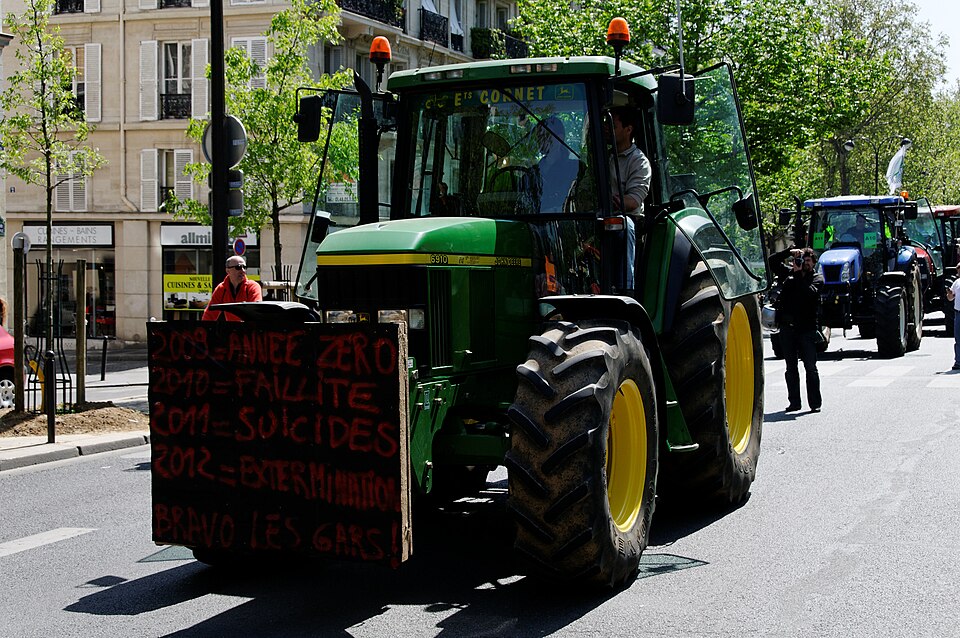
The move comes amid weeks of demonstrations by French farmers, who argue that the agreement would expose them to unfair competition from countries with less stringent environmental and food safety rules. Protests have also been fuelled by domestic grievances, including livestock culls linked to outbreaks of lumpy skin disease.
Agriculture Minister Annie Genevard said on Sunday that France would intensify checks on around a dozen imported food products to ensure they do not contain substances banned under European Union regulations. She added that a decree would soon be issued to suspend imports of products already known to include such chemicals.
“Imports, wherever they come from, must comply with our standards,” Genevard wrote on X. “France is setting an example in Europe with this unprecedented decree covering more than a dozen food products.”
According to the minister, fruits such as melons, apples, apricots, cherries, strawberries and grapes, as well as potatoes, will only be sold in France if they show no traces of banned substances. Imports including avocados, mangoes, guavas and certain citrus fruits will also face stricter scrutiny before entering the French market.
Prime Minister Sebastien Lecornu earlier warned that any imported product found to contain traces of banned herbicides and fungicides — including mancozeb, glufosinate, thiophanate-methyl and carbendazim — would be barred from sale in France.
The EU-Mercosur trade agreement, involving Brazil, Argentina, Paraguay and Uruguay, was concluded in 2019 but has yet to be ratified, as it requires approval from individual EU member states. While Germany and Spain support the deal, opposition remains strong in France, where critics fear an influx of cheaper agricultural products, particularly beef, that may not meet EU standards.
“Protecting our farmers, safeguarding public health and resisting unfair competition is non-negotiable,” Genevard said, calling on the European Commission to enforce similar measures across the bloc. “If necessary, France will act again.”
Diplomatic sources in Brussels say the EU is aiming to sign the Mercosur agreement on 12 January in Paraguay, which is due to assume the rotating presidency of the South American trade bloc from Brazil. Photo by Croquant, Wikimedia commons.