A wave of demonstrations has swept through at least a dozen European countries this autumn, with mounting anger over the cost of living, housing shortages, deteriorating public services and political leadership fuelling
unrest. While many rallies have remained peaceful, several have escalated into violent confrontations, prompting arrests, emergency restrictions and forceful police responses.
The latest protest movement emerged at the beginning of the school year in France, where secondary-school students demanded greater investment in education. The demonstrations have since spread across the continent, attracting students, young people, trade unions, housing activists and other groups dissatisfied with economic conditions and government policies.
The scale of the unrest varies considerably from country to country, ranging from peaceful marches and occupations to street clashes, vandalism and confrontations with security forces.
In France, police detained approximately 565 people during nationwide demonstrations on Saturday. Four police officers and a gendarme were injured in Paris.
Germany also witnessed arrests following disturbances at a Generation Z demonstration in central Cologne. Five people were taken into custody on Saturday. In the Netherlands, police detained 34 people in The Hague amid unrest linked to calls for a youth demonstration.
In London, more than 100 people were arrested after gathering near the US Embassy in support of Palestine Action, an organisation banned in the UK.
The following is an overview of the major protest movements across Europe as of late October.
Germany: Generation Z takes to the streets
Tens of thousands of young people demonstrated in Berlin, Frankfurt, Cologne and other German cities on 31 October, joining a wider European movement inspired by youth-led protests in France and Spain.
The demonstrations were organised following a call by the group “GenZ regelt”, meaning “Generation Z will sort it out”.
Participants highlighted deteriorating school infrastructure, the rising cost of living and concerns over the potential return of compulsory military service. Climate change also featured prominently among their demands.
Although many rallies passed peacefully, disturbances in Frankfurt and Cologne escalated into looting and riots, requiring police intervention.
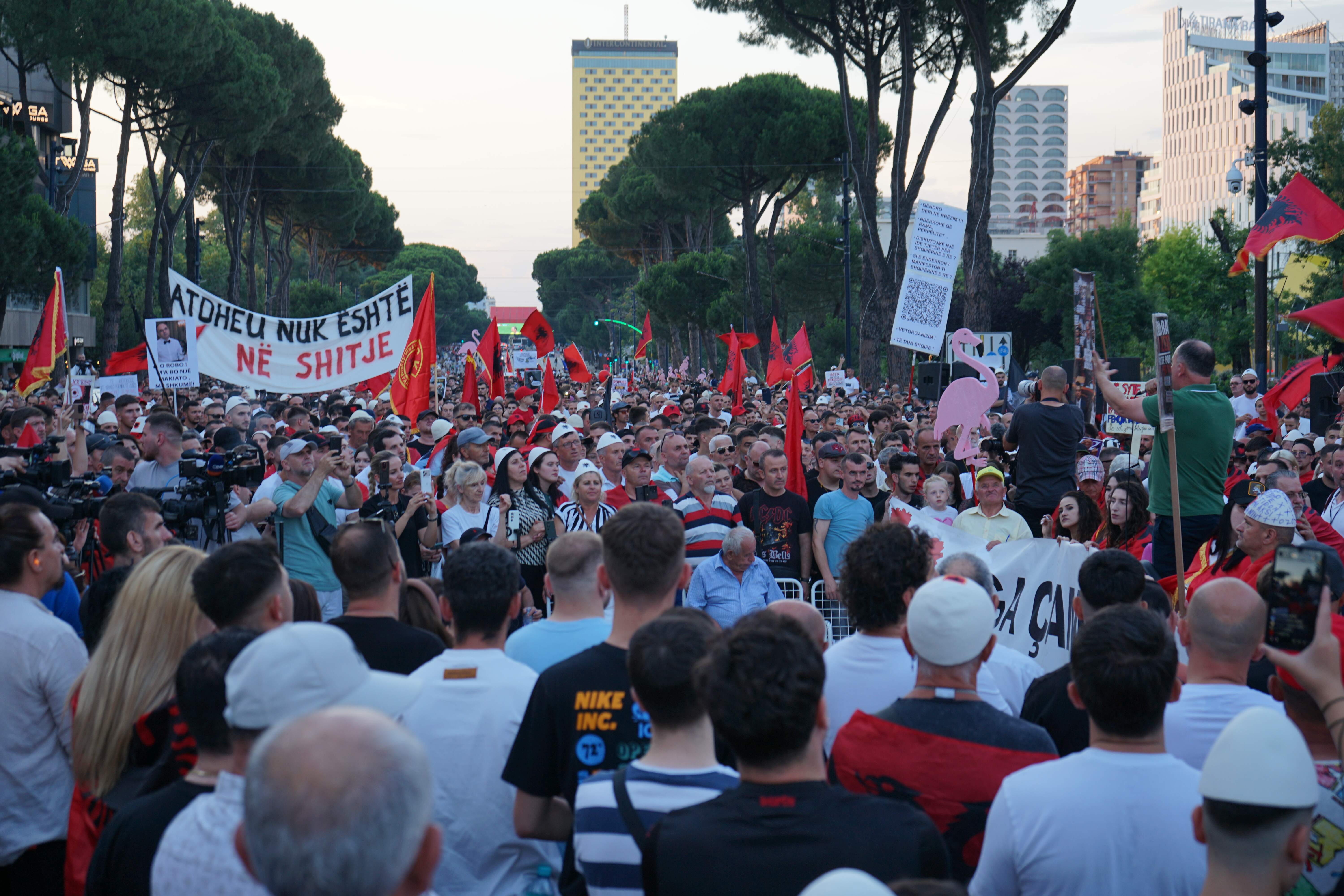
Albania: Corruption and political discontent fuel unrest
Anti-government demonstrations in Albania began in May, initially targeting a controversial coastal tourism development project reportedly benefiting associates of US President Donald Trump.
The movement has since expanded into a broader challenge to corruption and the leadership of Prime Minister Edi Rama, who has governed the country of approximately 2.3 million people since 2013.
A largely leaderless student movement has also raised concerns about shortcomings in healthcare, limited economic opportunities and the uncertain future facing young people.
For months, demonstrators marched peacefully through Tirana, gathering outside the prime minister’s office and demanding his resignation.
However, protests have become increasingly violent since mid-October, with daily clashes between demonstrators and police. According to Albania’s Interior Ministry, approximately 300 people have been injured, nearly two-thirds of them members of the security forces.
Police have faced attacks involving stones, Molotov cocktails and pyrotechnics. Officers have responded with water cannon, tear gas and rubber bullets to disperse crowds.
Belgium: Education protests merge with nationwide labour unrest
Belgium’s autumn began with demonstrations by French-speaking teachers over education policy, followed by protests involving schoolchildren and students inspired by the movement in neighbouring France.
Violent incidents occurred in several cities, with particularly serious disturbances in Liège. Fires, vandalism and confrontations with police prompted authorities to temporarily prohibit gatherings in some areas. Water cannon and tear gas were deployed to disperse protesters.
Labour disputes have added to the growing social tensions.
On 9 October, nearly 50,000 people marched through Brussels during a national demonstration organised by trade unions against federal government policies.
The rally initially proceeded peacefully but later descended into clashes near Brussels Central Station and Brussels-Midi railway station. Police used tear gas and water cannon against groups of troublemakers, while approximately 100 people were detained.
Several hundred demonstrators subsequently gathered in Brussels and Liège on multiple occasions in late October.
Trade unions are planning another nationwide demonstration on 10 December, bringing together workers from across the non-profit sector.
Spain: Housing crisis sparks political upheaval
Spain’s housing crisis has become a central focus of the autumn protest movement.
Public anger intensified following the eviction of a woman in her eighties from her Madrid home. Her death two weeks later triggered widespread outrage and major demonstrations across the country.
The incident has contributed to a broader political crisis, with early general elections scheduled for 29 November.
Housing activists continue to occupy protest camps in several cities, particularly in central Madrid, demanding stronger tenant protections and measures to address housing affordability.
The country’s main trade unions have also called a general strike for 11 November, seeking progress on housing and wage demands ahead of the elections.
France: Nationwide demonstrations escalate
France remains at the centre of the European protest movement, with hundreds of thousands of people taking to the streets on three consecutive Saturdays in October.
The demonstrations have brought together secondary-school students, university students, trade unions and the Yellow Vest movement, with the rising cost of living and demands for greater public investment among the main grievances.
The protests have repeatedly escalated into violence and property damage, particularly in Paris and other major cities.
On 17 October, widespread looting and clashes prompted a forceful police response. Authorities estimated that 410,000 people participated nationwide, while organisers claimed the turnout reached 800,000.
Hundreds of demonstrators have been detained during police operations. Several protesters, including minors, have suffered serious injuries during public-order interventions since mid-September.
According to France’s Interior Minister, 1,193 police officers and gendarmes have also been injured.
The government has introduced curfews and prohibited certain demonstrations, while considering additional security measures, including the deployment of military personnel.
The movement has expanded beyond economic and education-related grievances. Following an attack in the Paris region on 23 October that left one person dead and seven injured, protesters have increasingly highlighted concerns about rising racism.
Organisations involved in the demonstrations are calling for further action in November. Planned initiatives include blockades of secondary schools and universities on 3 and 5 November, as well as a nationwide trade-union mobilisation on 5 November.
The Yellow Vest coordination group has also called for demonstrations to continue on 6 and 7 November under the slogan “popular six-seven”.
Italy: Students and workers demand economic relief
Hundreds of thousands of students and workers demonstrated across Italy on 30 October, demanding increased funding for education and measures to ease the pressure of rising living costs.
The demonstrations, among the largest in the current European protest wave, were largely peaceful.
However, the authorities have deployed soldiers and adopted a security decree that makes it easier to detain minors.
The protests have also coincided with growing discontent among truck drivers, taxi operators and farmers, who have mobilised in recent weeks over soaring fuel prices and opposition to increased defence spending.
The Netherlands: Police intervene amid youth unrest
The Hague experienced unrest on 31 October after social media messages called for rioting and looting under the banner of a Generation Z demonstration.
Dutch police detained approximately 30 people for offences including public violence, wearing face-covering clothing and possessing prohibited items.
Authorities reported no major incidents, although the arrests highlighted growing concerns about the potential for youth-led demonstrations to escalate into disorder.
Portugal: Housing activists clash with authorities
Thousands of people protested in Portugal on 20 October, primarily in Lisbon and Porto, following the dismantling of camps established by housing-rights activists.
The operation in the capital resulted in 55 detentions and left two people with minor injuries.
The demonstrations reflect growing frustration over housing affordability and the treatment of activists demanding greater government intervention in the property market.
Switzerland: Youth protests spread to major cities
Hundreds of people gathered in Zurich and Basel on 31 October, joining the broader European movement under the slogan “We've had enough in Switzerland too”.
The demonstrations were inspired by youth protests elsewhere on the continent.
In recent days, unidentified individuals had circulated calls on social media using the German-language slogan “GenZ regelt”, reflecting the growing influence of the movement originating in Germany.
Serbia: Student movement reshapes political landscape
Serbia’s protest movement began following the deadly collapse of a railway station canopy in Novi Sad in November 2024, which killed 16 people.
The tragedy triggered widespread public anger over corruption, government accountability and alleged failures in public infrastructure oversight.
Student-led demonstrations subsequently developed into one of the largest anti-government movements Serbia has experienced since the fall of Slobodan Milošević in 2000.
The movement achieved a major political breakthrough in the October 2026 elections, defeating the nationalist party led by Aleksandar Vučić.
The Serbian protests stand out among the current European demonstrations, having evolved from public outrage over a specific disaster into a movement capable of challenging the country's political leadership.
A continent facing growing social pressure
The protests across Europe reflect a convergence of economic and political frustrations rather than a single coordinated movement.
Housing affordability, inflation, education funding, public services and distrust in political institutions have emerged as recurring themes, particularly among younger generations.
While the scale and intensity of demonstrations differ between countries, the growing frequency of clashes and arrests suggests that governments across Europe are facing mounting pressure to address social grievances before further unrest develops. Photo by Albinfo, Wikimedia commons.





